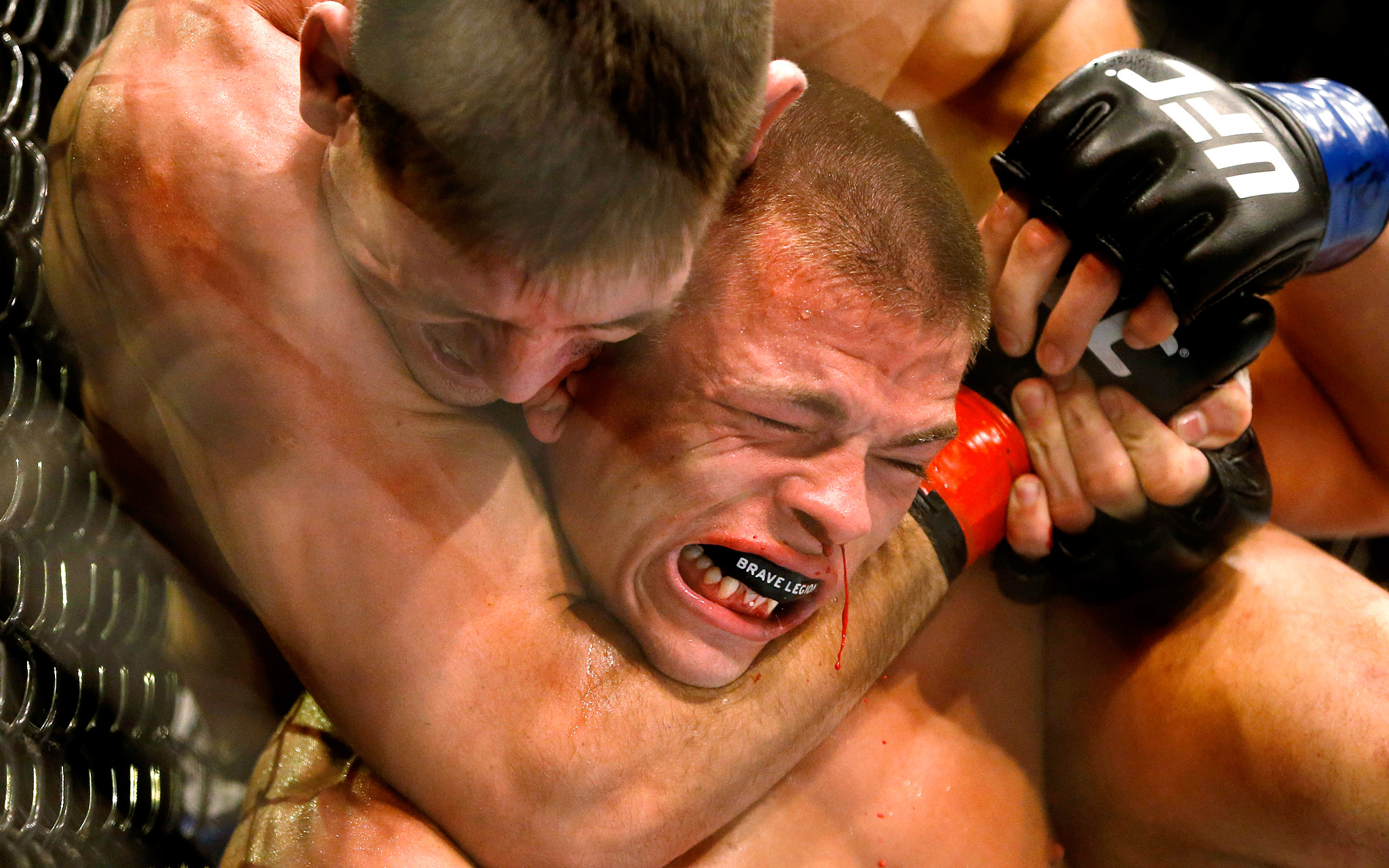
If your initial conception of jiu-jitsu was formed while watching Royce Gracie in the early Ultimate Fighting Championship tournaments in the first half of the 1990s, the intervening years have been interesting ones.
The sport of competitive jiu-jitsu has soared in popularity - with live streams of jiu-jitsu competitions from as far away as Brazil and Abu Dhabi increasingly a regular part of the average BJJ fan's agenda, and the IBJJF expanding its tournament circuit into a new major North American city every time you turn around. As someone who began training as jiu-jitsu superstars like Roger Gracie, Ronaldo Souza, and Marcelo Garcia were dominating the sport jiu-jitsu scene, it was hard not to have an optimistic sense of where this growing emphasis on the jiu-jitsu black belt v.s. jiu-jitsu black belt notion of jiu-jitsu competition seemed to be going.
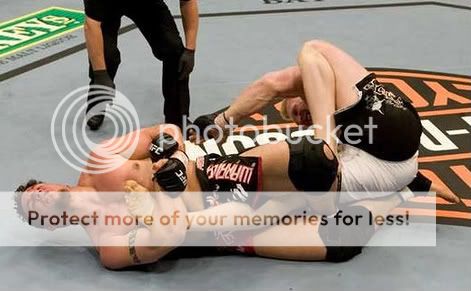
But watching the black belt debut of one of our contemporary era's up 'n' coming young superstars this evening, I felt my heart sink a bit. Certainly not as a reflection of the performance: an armbar victory is an armbar victory and all the moreso against a talented, proven opponent.
Nevertheless seeing the entrails of what has become contemporary jiu-jitsu: the emphasis on gi grips, the guard-uber-alles positioning, the endless inversions ... While a part of me enjoys and envies the technical mastery involved, I'll admit that there's another part of me wondering if what seems like an evolution in the art of jiu-jitsu is actually something else entirely.
Fighting against evolution is a dangerous thing. Judo is engaged in this Sisyphus-like labor as we speak, seeking to rid itself of any aspect of Western wrestling by banning direct attacks on the legs.
This is the same judo that was arguably crippled as a martial art (however bolstered as an Olympic sport) when the time allowed for ne-waza or ground fighting became limited.
But what is evolution? And, maybe more importantly, what is driving the evolutionary change? In sport jiu-jitsu, the driver of change is not increased exposure to new, foreign challenges from outside the art, but instead from increasingly nuanced, increasingly contrived innovations from within the art itself.
This doesn't mean that the result is inherently decadent - though there is a significant danger that this can develop. But consider the same phenomenon in other spheres of endeavor: political theory developed by political scientists, but never influenced by or tested by free citizens or voters. Economic theory developed by economists, but never tested by free markets or a business cycle. Theories of reality developed and debated by philosophers, but never tested by the real world of gravity and physics.
I spent many years studying contemporary poetry. And if there was one thing that characterized contemporary poetry in the 1980s and 1990s in particular, it was that contemporary poetry was only read by those who wrote it. That's an exaggeration. But not by much. It was a very insular world, one that had grown to embrace its own irrelevance to the broader cultural conversation.
Some may find it hard to believe that it wasn't always so with contemporary poetry. Poets, even American poets, just a generation or two ago were names that most well-read people had heard of: Robert Frost, Langston Hughes, William Carlos Williams, Syliva Plath - even if they never really read that much poetry.
All that said to say that I think I know what an art looks like when it becomes more pre-occupied with its own internal dynamics than with the sort of challenges it was originally developed to deal with. That doesn't mean that the art is on the road to obsolescence or irrelevance or decadence. But it does mean that practitioners of the art should be aware of how their art is changing, what is driving that change and, should they decide so, what to do in response.
Eddie Bravo famously said that MMA without jiu-jitsu was bad kickboxing. Of late, I've found myself wondering if jiu-jitsu without MMA - or at least the sort of sensibilities that MMA and vale tudo bring - is a similarly sub-optimal state.