Tonight a pretty healthy sized class. We worked on standing guard passes, two techniques really, for passing the knees.
Standing in front of the guy, you grab the pants by the knees. You will hold this grip throughout the move. Step up with your outside leg to place your foot at the level of his hip, using your shin to keep that leg from moving outward.
From here, take a backstep that send your other leg back behind and to the side. It's easier to do that to describe. Basically, your legs will be somewhat crossed and your shoulders will run parallel to his body.
The last part of this move has you slide the leg-trapping leg down toward his feet as you lower your upperbody on top of his into what I'll call "south-facing side control." From there, you can switch to regular side control.
The second technique shows what to do if the guy rolls into you as you try to pass. You begin with the above technique. But when he rolls over into your leg, instead of trying to drop into "south-facing side control" you step over his legs with your "backstep" leg (remember to keep the grip on the pant legs by the knee and to use that grip for balance) and then backstep with the other leg and lower yourself into "south-facing side control" from the other side.
Apparently a lot of guys were having trouble with this technique. At least it sounded that way when Rodrigo stopped us a few times to show us the move again. I think I got it pretty well, though. I was working with Mario and, as I told him, sometimes it pays to be low to the ground in the first place!
Sparring was okay. I was a little disappointed with my performance at first. But the more I thought about it, the better I felt. I rolled with Tommy and got man-handled (I think I tapped three times in five minutes), then rolled with this new guy Scott who was a little smaller than me. After struggling from within his guard for awhile, I managed to pass using the Saulo Ribeiro ground pass and eventually work from side control to mount. From there I (eventually) managed to secure Saulo Ribeiro's "katagatame." It felt like the first time I'd gotten a submission in months!
After that I rolled with Joe, who was pretty gassed from doing three sessions in a row. I had top position for most of the time, but Joe does a really good job of replacing the guard--something that will be a goal of mine, especially when rolling with guys like Tommy and ...
Jesse the Blue, who I finished the night with. Not too much to say about that: Jesse is bigger, stronger, and much, much better technically. He caught me in a couple of armbars and a choke.
Five months in, I'm starting to figure out what I want to do in training. I think I've got a top game worked out, I just need to figure out some plays from the bottom. When rolling with guys like Tommy and both Jesses, my goal has to be survival--preferably by gettting them in my guard and (often) replacing the guard when they look like they are about to pass.
Kid Peligro makes a good point in his book, The Essential Guard that if you develop good skills at replacing the guard, then you can be more aggressive in your attack because you know that if you make a mistake, you can retreat to your guard game, reset, and go back on the offensive. Makes a lot of sense to me.
Tuesday, January 24, 2006
Saturday, January 21, 2006
Butterflies on Saturday
Only five of us: Griff, Mauricio, Jesse Black (who showed up gi-less), Arnell (who was a little late) and myself.
We worked arm bars from the mount as a drill to warm-up. Then moved on to butterfly guard. Rodrigo was mostly getting us accustomed to the position--using it and trying to pass it.
Sparred with everyone. Griff got me in an RNC and an armbar. Sure, he's got me by more than fifty pounds, but I can tell he's getting better. Jesse the Black got me in a triangle. His triangles are especially tough, which means I'm doing something very wrong that I need to figure out. I think it's posture, which Rodrigo was yelling to me when I was rolling with Mauricio and stuck in his guard.
Got mount with Arnell, but really couldn't do anything with it. I need to review Ribeiro's katagatame video ...
We worked arm bars from the mount as a drill to warm-up. Then moved on to butterfly guard. Rodrigo was mostly getting us accustomed to the position--using it and trying to pass it.

Sparred with everyone. Griff got me in an RNC and an armbar. Sure, he's got me by more than fifty pounds, but I can tell he's getting better. Jesse the Black got me in a triangle. His triangles are especially tough, which means I'm doing something very wrong that I need to figure out. I think it's posture, which Rodrigo was yelling to me when I was rolling with Mauricio and stuck in his guard.
Got mount with Arnell, but really couldn't do anything with it. I need to review Ribeiro's katagatame video ...

Wednesday, January 18, 2006
After Hours: Clock Position Drill
Some of the best stuff in studying bjj comes after the class ends. Last night, I got Cindy to show me that "clock" position drill again. If it's true--as I shouted endlessly at the last Copa Northwest--that position comes first, then this drill will really help me move better from the top position.
I more or less had the drill down after she taught it awhile back. But it was good to see it again. Here are the "stations":
Side control
(underhook head, underhook far thigh, knee in hip)
Open hips south ("south" means "toward hips/legs/feet")
Step over legs into mount
(Remember Cindy's hint about walking toward the legs to get space to step into mount)
Mount
(knees toward chest, weight back)
Kickstand or "back step" to side with far leg
(stay heavy with the upperbody)
Drop into side control
Side control
Open hips north
Step over head into north-south control
North-south control
Kickstand or "back step" to side with far leg
(put pass-side elbow across body to opposite of pass side)
Drop into scarf hold position
(hips open to north
Switch hips to south and into side control.
I more or less had the drill down after she taught it awhile back. But it was good to see it again. Here are the "stations":
Side control
(underhook head, underhook far thigh, knee in hip)
Open hips south ("south" means "toward hips/legs/feet")
Step over legs into mount
(Remember Cindy's hint about walking toward the legs to get space to step into mount)
Mount
(knees toward chest, weight back)
Kickstand or "back step" to side with far leg
(stay heavy with the upperbody)
Drop into side control
Side control
Open hips north
Step over head into north-south control
North-south control
Kickstand or "back step" to side with far leg
(put pass-side elbow across body to opposite of pass side)
Drop into scarf hold position
(hips open to north
Switch hips to south and into side control.
Tuesday, January 17, 2006
Live from Side Control
Not a bad class, tonight. We worked out of side control after a warm-up by Cindy. The techniques were familiar: trapping the arm with your own gi and moving your head back and forth to keep the arm from reaching over your shoulder or under your head. When the arm comes back down, you grip it for the kimura (reverse hips to northside and step over the head as you crank back the kimura) or the straight arm lock. I worked with Mario, who is always good to train with.
I didn't do so well in the live drill. I always have a focus problem when we move from the technique drill to the live drill--and that was in evidence tonight. I worked with Jesse the White (now sporting one of those black gis), and really didn't feel as if I did very well. Training with bigger guys like Jesse--and the white belt in the blue gi I sparred with afterward--really exposes my lack of technique at this point.
I did somewhat better during sparring (I asked the guy if he would might starting in my guard, which was no problem), it terms of using my legs more and not just clinging in closed guard (which I still did too much of). The guy was very good at standing up in the guard, even though I was able to get the omoplata sweep on him twice (though not to a complete sweep unfortunately).
Classes are looking to move from Tuesday and Thursday to Monday and Wednesday in February. I kind of like the current schedule, but having Thursday and Friday off will be a nice way to finish off the work week. I'll still try and train every other Saturday morning.
I've done a pretty crummy job of my morning cardio this year. The flu didn't help. But I'm finding it hard to get back to the discipline I had late last year when I was doing four mornings a week on the treadmill.
A few aches and pains. My left shoulder is still pretty sore--though it doesn't seem to get in the way of my jiu jitsu training. And I've got a bad ring finger on my right hand--probably just a jam or mild sprain. It doesn't get in the way of training much, either.
I didn't do so well in the live drill. I always have a focus problem when we move from the technique drill to the live drill--and that was in evidence tonight. I worked with Jesse the White (now sporting one of those black gis), and really didn't feel as if I did very well. Training with bigger guys like Jesse--and the white belt in the blue gi I sparred with afterward--really exposes my lack of technique at this point.
I did somewhat better during sparring (I asked the guy if he would might starting in my guard, which was no problem), it terms of using my legs more and not just clinging in closed guard (which I still did too much of). The guy was very good at standing up in the guard, even though I was able to get the omoplata sweep on him twice (though not to a complete sweep unfortunately).
Classes are looking to move from Tuesday and Thursday to Monday and Wednesday in February. I kind of like the current schedule, but having Thursday and Friday off will be a nice way to finish off the work week. I'll still try and train every other Saturday morning.
I've done a pretty crummy job of my morning cardio this year. The flu didn't help. But I'm finding it hard to get back to the discipline I had late last year when I was doing four mornings a week on the treadmill.
A few aches and pains. My left shoulder is still pretty sore--though it doesn't seem to get in the way of my jiu jitsu training. And I've got a bad ring finger on my right hand--probably just a jam or mild sprain. It doesn't get in the way of training much, either.
Monday, January 16, 2006
The Essential Guard
I broke down over the weekend and picked up a copy of this at the local Borders.

I've been skipping around, but so far I'm very, very impressed with this book.
My tendency is to wrestle when I do bjj. As such, my guard is really weak technically. My best move is the omoplata sweep, but that requires the guy to stand up--in addition to me being able to control the sleeve on the same side as the leg I attack.
The Essential Guard does what none of my other books on Brazilian jiu jitsu do not do: it explains not only the physics and the context for a given technique, but the theory behind it. I'm a hopeless intellectual, and understanding the idea behind a certain technique or set of techniques, helps me learn a lot faster than when I'm confronted with a bunch of separate parts.
Give me a list, a "Ten Commandments of ...", a set of basic rules to follow, and I'm set. The Essential Guard is one of the best organized jiu jitsu books I've come across, which I suspect has to do with the fact that it is Kid Peligro's book (as opposed to a book that Peligro is co-authoring with one of the jiu jitsu superstars like his good books with Jean Jacques Machado and Renzo and Royler Gracie.
Anyway, combined with the stuff that Rodrigo has been showing us with the spider guard and some of the macro stuff from Peligro's book, I'm very anxious to spend some mat time working from the back. Come tourney time in March, I'll be glad to go back to my top game. But the next month has to be a single-minded focus on fighting from the back.

I've been skipping around, but so far I'm very, very impressed with this book.
My tendency is to wrestle when I do bjj. As such, my guard is really weak technically. My best move is the omoplata sweep, but that requires the guy to stand up--in addition to me being able to control the sleeve on the same side as the leg I attack.
The Essential Guard does what none of my other books on Brazilian jiu jitsu do not do: it explains not only the physics and the context for a given technique, but the theory behind it. I'm a hopeless intellectual, and understanding the idea behind a certain technique or set of techniques, helps me learn a lot faster than when I'm confronted with a bunch of separate parts.
Give me a list, a "Ten Commandments of ...", a set of basic rules to follow, and I'm set. The Essential Guard is one of the best organized jiu jitsu books I've come across, which I suspect has to do with the fact that it is Kid Peligro's book (as opposed to a book that Peligro is co-authoring with one of the jiu jitsu superstars like his good books with Jean Jacques Machado and Renzo and Royler Gracie.
Anyway, combined with the stuff that Rodrigo has been showing us with the spider guard and some of the macro stuff from Peligro's book, I'm very anxious to spend some mat time working from the back. Come tourney time in March, I'll be glad to go back to my top game. But the next month has to be a single-minded focus on fighting from the back.
Saturday, January 14, 2006
OntheMat Interview: Marcio Feitosa

Here's a link to an interview with the lead instructor at Gracie Barra, Lake Forest in California, Marcio Feitosa.
My goal is to build a jiu-jitsu community just as Carlos Gracie Jr. has in Brazil. I would love to earn the respect and admiration that Carlos has. I wish to see jiu-jitsu as popular and widespread in the US as in Brazil.
Thursday, January 12, 2006
Spider Guard City
Tonight we could only work on half the mat because of the leak in the warehouse roof. There were about ten or twelve of us. So instead of the usual warm-up, we started off with some stretching, then went straight into some technique work.
I really enjoyed tonight's class. We worked almost exclusively from the spider guard. Rodrigo showed us five different techniques: a transition from closed guard to spider guard, spider guard with the out-to-in leg hook on the arm, spider guard with the bicep stretcher, spider guard with the bicep stretcher to foot-on-knee sweep, and a spider guard sweep/counter to one-knee pass attempt.
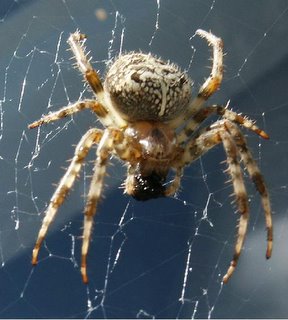
I wrote in my notes "recall that Rodrigo showed us some passes from the spider guard, including one that begins with the spider guard out-to-in leg hook. You let the guy creep into the open space near your chest (your other leg is down), then you reach under the near leg at the knee and roll over your far shoulder, executing the sweep.
I'm not sure what to do with the inside leg. Do I use it to trap the guy's leg (the one that is on the same side as the hooked arm? If you let the guy creep into your "half spider guard" then where is your inside leg?
By the way, here is a link to some earlier thoughts on the spider guard.
A couple of highlights on the techniques:
Closed guard transition to spider guard: here you want to open your guard and place one foot on the mat. With your hands on the guy's shoulders, elbow escape out, hipping out on the same side as the foot on the mat. Now take the leg with the foot on the mat and bring the knee up as tight to your body as possible before opening your hip out to slap on one half of the spider guard. The other knee should have an easier trip.
I really enjoyed tonight's class. We worked almost exclusively from the spider guard. Rodrigo showed us five different techniques: a transition from closed guard to spider guard, spider guard with the out-to-in leg hook on the arm, spider guard with the bicep stretcher, spider guard with the bicep stretcher to foot-on-knee sweep, and a spider guard sweep/counter to one-knee pass attempt.
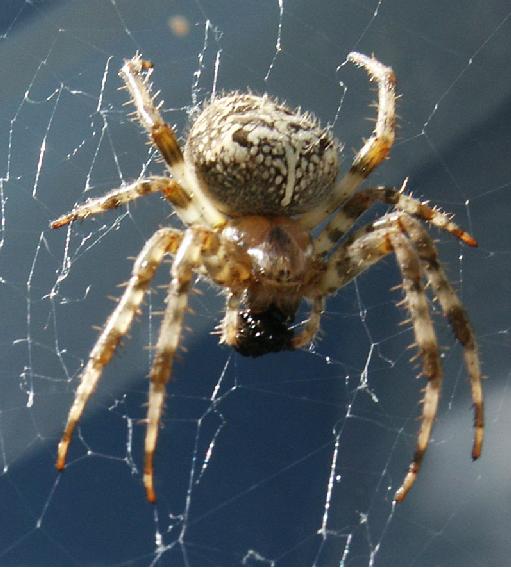
I wrote in my notes "recall that Rodrigo showed us some passes from the spider guard, including one that begins with the spider guard out-to-in leg hook. You let the guy creep into the open space near your chest (your other leg is down), then you reach under the near leg at the knee and roll over your far shoulder, executing the sweep.
I'm not sure what to do with the inside leg. Do I use it to trap the guy's leg (the one that is on the same side as the hooked arm? If you let the guy creep into your "half spider guard" then where is your inside leg?
By the way, here is a link to some earlier thoughts on the spider guard.
A couple of highlights on the techniques:
Closed guard transition to spider guard: here you want to open your guard and place one foot on the mat. With your hands on the guy's shoulders, elbow escape out, hipping out on the same side as the foot on the mat. Now take the leg with the foot on the mat and bring the knee up as tight to your body as possible before opening your hip out to slap on one half of the spider guard. The other knee should have an easier trip.
Tuesday, January 10, 2006
Armbars and Guard Passes
Tuesday night was a pretty standard class. Warm-up laps with intervals of leg raises and bicycle kicks. Takedown drills using both the leg-through flip and the "grab and single leg". On that last takedown, the "grab and single leg," it is important to remember to grab the collar that is on the same side. Do not reach across his body.
If I've got this right, then that means that sometimes you are grabbing on the side he has forward, other times you are grabbing on the side he has back. Either way, when you pull/jerk him toward you, he will almost certainly take a step forward to maintain his balance. The leg that steps forward is the one you grab for the single leg takedown, while pushing forward and straightening the arm of the hand that has the collar.
We drilled three techniques. The armbar from the mount. The armbar from the guard. A standing guard pass.
Some notes on the last technique. The basics of the pass are: grab the sleeve and stand. Keep your elbow in tight against your hip. With your other hand, push down on his knee while stepping back with the leg on the same side.
When the guard opens up, take the hand that has been grabbing the sleeve and underhook the leg on that side. Lower your body to go chest to chest and, while doing this, put your outside knee across the guy's leg that is on the ground.
With your other leg you want to do a kickstand, opening your hips to the south, over the down leg. You want to be as close to perpendicular to his body as possible, maintaining your balance and keeping your chest on his. From here, you want to cross over the down leg and switch your hips back to neutral and go into side control.
I want to double check on the actual pass, after you've underhooked the leg. But I think this is how the pass works.
We did a different type of sparring drill. One guy is mounted and needs to submit the guy on top or reverse him. The guy on top needs to submit the mounted guy, basically. I did okay in this drill, not great, not especially good. I got caught in a bicep armlock by Big Mike and it took me an uncomfortably long time to get out of it (I was pretty close to tapping out). I need to remember Saulo Ribeiro's advice for being on top in the mount: weight back and over his hips, knees forward. You don't want to put all your weight on the guy because that gives him more control when he goes to bump. Put your weight on your knees and ride out any attempts to dislodge you.
Also consider switching from mount to S-mount and working the choke/armbar combo attack ...
Tonight's sparring was with Jesse the Blue, Robert, Joe and Tommy. Four rounds without a break. Pretty exhausting, but I think I managed okay. I did spend entirely too much time in Robert's guard without trying more vigorously to pass. I had a nice sweep on Joe from the closed guard--a sweep that was sort of based on the mount-escape-to-half guard that Rodrigo taught us last week and a bit like the first sweep that Rey Diogo shows in his article in the September 2005 issue of Grappling.
The key to the sweep is in grabbing the cuff on one side and grabbing the pants by the knee on the other. You want to step on the hip along with grabbing the cuff (same side). On the pants-grab side, you want to bring your leg up and under his armpit--essentially underhooking his arm. As your leg is getting into position under the armpit, lift up at the knee and turn toward the cuff-grip. He should roll right over almost effortlessly.
After class, Rodrigo was talking about trying to get us to open our guard more, especially in stepping on the hip as a way of getting greater control over the guy in your guard. He also showed us a half-guard sweep. The basic idea behind these sweeps is to free your hips. Rodrigo adds an X-guard like move where you put a hook high around the thigh of the guy on top.
Another note that bears repeating: always turn into the submission attempt when defending!
I figure I was about on par tonight. I'm still not active enough around the guard--either in always standing out of the guard if I'm not doing the Saulo Ribeiro ground pass, or in not going more effectively for the sweep. The sweeps I really want to work on. Right now I've got the scissors sweep and what I'll call the Diogo sweep. I've also got the omoplata sweep in the event that the guy stands, but I wouldn't mind coming up with one or two more.
If I've got this right, then that means that sometimes you are grabbing on the side he has forward, other times you are grabbing on the side he has back. Either way, when you pull/jerk him toward you, he will almost certainly take a step forward to maintain his balance. The leg that steps forward is the one you grab for the single leg takedown, while pushing forward and straightening the arm of the hand that has the collar.
We drilled three techniques. The armbar from the mount. The armbar from the guard. A standing guard pass.
Some notes on the last technique. The basics of the pass are: grab the sleeve and stand. Keep your elbow in tight against your hip. With your other hand, push down on his knee while stepping back with the leg on the same side.
When the guard opens up, take the hand that has been grabbing the sleeve and underhook the leg on that side. Lower your body to go chest to chest and, while doing this, put your outside knee across the guy's leg that is on the ground.
With your other leg you want to do a kickstand, opening your hips to the south, over the down leg. You want to be as close to perpendicular to his body as possible, maintaining your balance and keeping your chest on his. From here, you want to cross over the down leg and switch your hips back to neutral and go into side control.
I want to double check on the actual pass, after you've underhooked the leg. But I think this is how the pass works.
We did a different type of sparring drill. One guy is mounted and needs to submit the guy on top or reverse him. The guy on top needs to submit the mounted guy, basically. I did okay in this drill, not great, not especially good. I got caught in a bicep armlock by Big Mike and it took me an uncomfortably long time to get out of it (I was pretty close to tapping out). I need to remember Saulo Ribeiro's advice for being on top in the mount: weight back and over his hips, knees forward. You don't want to put all your weight on the guy because that gives him more control when he goes to bump. Put your weight on your knees and ride out any attempts to dislodge you.
Also consider switching from mount to S-mount and working the choke/armbar combo attack ...
Tonight's sparring was with Jesse the Blue, Robert, Joe and Tommy. Four rounds without a break. Pretty exhausting, but I think I managed okay. I did spend entirely too much time in Robert's guard without trying more vigorously to pass. I had a nice sweep on Joe from the closed guard--a sweep that was sort of based on the mount-escape-to-half guard that Rodrigo taught us last week and a bit like the first sweep that Rey Diogo shows in his article in the September 2005 issue of Grappling.
The key to the sweep is in grabbing the cuff on one side and grabbing the pants by the knee on the other. You want to step on the hip along with grabbing the cuff (same side). On the pants-grab side, you want to bring your leg up and under his armpit--essentially underhooking his arm. As your leg is getting into position under the armpit, lift up at the knee and turn toward the cuff-grip. He should roll right over almost effortlessly.
After class, Rodrigo was talking about trying to get us to open our guard more, especially in stepping on the hip as a way of getting greater control over the guy in your guard. He also showed us a half-guard sweep. The basic idea behind these sweeps is to free your hips. Rodrigo adds an X-guard like move where you put a hook high around the thigh of the guy on top.
Another note that bears repeating: always turn into the submission attempt when defending!
I figure I was about on par tonight. I'm still not active enough around the guard--either in always standing out of the guard if I'm not doing the Saulo Ribeiro ground pass, or in not going more effectively for the sweep. The sweeps I really want to work on. Right now I've got the scissors sweep and what I'll call the Diogo sweep. I've also got the omoplata sweep in the event that the guy stands, but I wouldn't mind coming up with one or two more.
Monday, January 09, 2006
Escaping Rear Mount: Duck, Shuck and Swing
Writing about the Ribeiro escape from the rear mount a few days ago, I left out a key part of the escape.
In addition to blocking the choke, the other main ingredient of this escape is the "duck." This is when you scoot down into the rear mount so that your shoulders are below his shoulders. I did mention this (i.e., "get small"), but rewatching Saulo's video snippet made me want to reinforce the point.
You don't want to put your weight on him. That gives him control of your body, because your balance is dependent on what he does.
The other typical escape involves turning to your side and trying to unhook with your hands. Never try and unhook with your hands. Hand or hand/arm don't beat leg. Hip/body beats leg, though. So ...
You want your weight to be largely on the mat. If he keeps his hooks in, then he is blocked by your body from being able to do anything.
From there, shuck a leg and swing around the other leg (basically, swing around the hook that is still in). Whatever I do, I DO NOT want to try and swing around the leg I just shucked. This is classic jiu jitsu; using what was formerly your opponent's advantage into your advantage. So shuck and swing the other way. Worst case scenario is ending up in the guy's half guard. And we know what to do from there ...
Here's the escape. Choke defend with the thumb in. Then three moves to escape: duck, shuck and swing.
In addition to blocking the choke, the other main ingredient of this escape is the "duck." This is when you scoot down into the rear mount so that your shoulders are below his shoulders. I did mention this (i.e., "get small"), but rewatching Saulo's video snippet made me want to reinforce the point.
You don't want to put your weight on him. That gives him control of your body, because your balance is dependent on what he does.
The other typical escape involves turning to your side and trying to unhook with your hands. Never try and unhook with your hands. Hand or hand/arm don't beat leg. Hip/body beats leg, though. So ...
You want your weight to be largely on the mat. If he keeps his hooks in, then he is blocked by your body from being able to do anything.
From there, shuck a leg and swing around the other leg (basically, swing around the hook that is still in). Whatever I do, I DO NOT want to try and swing around the leg I just shucked. This is classic jiu jitsu; using what was formerly your opponent's advantage into your advantage. So shuck and swing the other way. Worst case scenario is ending up in the guy's half guard. And we know what to do from there ...
Here's the escape. Choke defend with the thumb in. Then three moves to escape: duck, shuck and swing.
Saturday, January 07, 2006
Mount Escape to Half Guard
Saturday's class was a solid one, with the main event being a new technique for escaping from mount to getting the mount guy in your half guard.
The move is not an escape or a reversal, which I have to remind myself. It is simple a way to get out from under the full mount--preferably before the referee has awarded the guy four points for achieving the mount position.
Here's the basic move as I remember it, though I'd like to see it at least one more time. You have been mounted. You've got to get out of this position quickly--essentially in three seconds--before the ref awards him the points.
I'll talk about the position from one side, though obviously you want to be ready to work it from whichever side is most advantageous.
Again, you've been mounted and you've got three seconds to get out of it into something better. That "better" is half-guard. How do we get there?
1. Grab the pants by the calf on one side. With the other hand, dive it between your body and his thigh and underhook the other leg/thigh.
2. Draw your feet up under your butt and upa ("bump") with a bias in the direction of the pants-grab. If you can bump him good straight up, that will probably be enough. But directional bumping is a good habit to get into, I think.
3. As you are getting near maximum altitude on the bump, you are going to put the pants-grabbed leg between your two legs--essentially slipping him into your half-guard. As you do this, use the underhook on the opposite side to tilt him further in the direction of the pants-grabbed (i.e., "trapped") leg that you are grapevining.
4. His body should be directed over the shoulder that is on the trapped side. Rodrigo pointed out that you want your head to be close to the knee of the underhooked leg. I think this is because it will (a) keep him from falling on your head when he comes down from the bump (this kept happening to Arnell when we worked this technique together on Saturday), and (b) help keep your hips from being under the guy as you work for a sweep from the half-guard.
Like I said, I want to see this one more time to make sure I'm right about the head near the knee part. I specifically remember him mentioning that was where your head was supposed to be. But I'd like to see it just one more time to make sure I've got the body motion down accurately.
Miscellany
When doing the crossbody half-guard pass that Rodrigo showed us months ago, I need to be very, very careful to keep my upper body on the guy's chest. I've got a tendency to throw myself over--which is fine--but I need to make sure that I keep my weight on the guy. Otherwise, it is very easy for him to roll me over. I want to kick my leg back, almost like doing a front split, and pull my trapped leg out as far as possible. But my upper body needs to stay chest-to-chest as much as possible.
When defending the rear mount, remember the three steps: first, block the choke. Do this using Saulo Ribeiro's technique of grabbing your own collar, thumb-first. Second, dump a hook. I think the easiest way to do this is to kick out your leg straight. The thing is that if you don't make a move after you do this, the guy will just put the hook back in--and this time he'll be more ready for the kick out. So, what you want to do is kick out with the leg that is on the same side the choke is coming from. If he is choking you with his right arm (i.e., right arm across your neck from behind), then you want to block the choke with your right hand and kick out with your right leg.
As you kick out, you want to get as small as possible inside his body. Technically, you can get small after you kick out, but it has to be almost immediate. As you get small--and assuming you've effectively shaken off the hook on your right side--you want to spin into him, turning to your left (again, assuming a choke from the right). The spin should be tight, and you should be lower than his shoulders so that you are essentially turning in his chest, not against his shoulders where he was more leverage to keep you from turning.
Check Saulo Ribeiro's video excerpt at GroundFighter.com for a primer on escaping rear mount.
Sparring in today's class was fine enough. We started standing and I rolled with Arnell, Jesse the Blue and Tommy. I wasn't too impressed with my takedown game, at all. But it's been a little while since we've worked takedowns, so I'll forgive myself for being a little rusty--especially against Jesse the Blue.
Rodrigo (and Arnell) did point out another standing guard pass that I need to try. You stand up in good posture (emphasis on good posture), grab the sleeve with one hand and step back with the leg on the other side while pushing the guard-leg on that side down at the knee. As Saulo points out, the stepping back of the leg is what provides the leverage, and the hand on the knee should be a little more than a compliment.
The move is not an escape or a reversal, which I have to remind myself. It is simple a way to get out from under the full mount--preferably before the referee has awarded the guy four points for achieving the mount position.
Here's the basic move as I remember it, though I'd like to see it at least one more time. You have been mounted. You've got to get out of this position quickly--essentially in three seconds--before the ref awards him the points.
I'll talk about the position from one side, though obviously you want to be ready to work it from whichever side is most advantageous.
Again, you've been mounted and you've got three seconds to get out of it into something better. That "better" is half-guard. How do we get there?
1. Grab the pants by the calf on one side. With the other hand, dive it between your body and his thigh and underhook the other leg/thigh.
2. Draw your feet up under your butt and upa ("bump") with a bias in the direction of the pants-grab. If you can bump him good straight up, that will probably be enough. But directional bumping is a good habit to get into, I think.
3. As you are getting near maximum altitude on the bump, you are going to put the pants-grabbed leg between your two legs--essentially slipping him into your half-guard. As you do this, use the underhook on the opposite side to tilt him further in the direction of the pants-grabbed (i.e., "trapped") leg that you are grapevining.
4. His body should be directed over the shoulder that is on the trapped side. Rodrigo pointed out that you want your head to be close to the knee of the underhooked leg. I think this is because it will (a) keep him from falling on your head when he comes down from the bump (this kept happening to Arnell when we worked this technique together on Saturday), and (b) help keep your hips from being under the guy as you work for a sweep from the half-guard.
Like I said, I want to see this one more time to make sure I'm right about the head near the knee part. I specifically remember him mentioning that was where your head was supposed to be. But I'd like to see it just one more time to make sure I've got the body motion down accurately.
Miscellany
When doing the crossbody half-guard pass that Rodrigo showed us months ago, I need to be very, very careful to keep my upper body on the guy's chest. I've got a tendency to throw myself over--which is fine--but I need to make sure that I keep my weight on the guy. Otherwise, it is very easy for him to roll me over. I want to kick my leg back, almost like doing a front split, and pull my trapped leg out as far as possible. But my upper body needs to stay chest-to-chest as much as possible.
When defending the rear mount, remember the three steps: first, block the choke. Do this using Saulo Ribeiro's technique of grabbing your own collar, thumb-first. Second, dump a hook. I think the easiest way to do this is to kick out your leg straight. The thing is that if you don't make a move after you do this, the guy will just put the hook back in--and this time he'll be more ready for the kick out. So, what you want to do is kick out with the leg that is on the same side the choke is coming from. If he is choking you with his right arm (i.e., right arm across your neck from behind), then you want to block the choke with your right hand and kick out with your right leg.
As you kick out, you want to get as small as possible inside his body. Technically, you can get small after you kick out, but it has to be almost immediate. As you get small--and assuming you've effectively shaken off the hook on your right side--you want to spin into him, turning to your left (again, assuming a choke from the right). The spin should be tight, and you should be lower than his shoulders so that you are essentially turning in his chest, not against his shoulders where he was more leverage to keep you from turning.
Check Saulo Ribeiro's video excerpt at GroundFighter.com for a primer on escaping rear mount.
Sparring in today's class was fine enough. We started standing and I rolled with Arnell, Jesse the Blue and Tommy. I wasn't too impressed with my takedown game, at all. But it's been a little while since we've worked takedowns, so I'll forgive myself for being a little rusty--especially against Jesse the Blue.
Rodrigo (and Arnell) did point out another standing guard pass that I need to try. You stand up in good posture (emphasis on good posture), grab the sleeve with one hand and step back with the leg on the other side while pushing the guard-leg on that side down at the knee. As Saulo points out, the stepping back of the leg is what provides the leverage, and the hand on the knee should be a little more than a compliment.
Friday, January 06, 2006
Xande Ribeiro: Jiu Jitsu Fighter of the Year
On the Mat has awarded Xande Ribeiro, Jiu-Jitsu Fighter of the Year.
Xande Ribeiro is the younger brother of one of my favorite jiu jitsu fighters, Saulo Ribeiro--who has allegedly just retired from active competition. If so, then Xande couldn't have picked a better time to shine. Parabens a voce, Xande!
Xande Ribeiro is the younger brother of one of my favorite jiu jitsu fighters, Saulo Ribeiro--who has allegedly just retired from active competition. If so, then Xande couldn't have picked a better time to shine. Parabens a voce, Xande!
Thursday, January 05, 2006
More Attacks from the Guard
Great, great night in jiu jitsu.
No warm-up, just straight into drills--which was a nice change of pace. We worked armbars from the mount, one step instead of three. Then three different techniques from the guard: an armbar attack, a scissors sweep, and then a transition to armbar attack after a failed scissor sweep attempt.
I was surprised at how well I did with the armbar attack from the guard. As I've said time and time again, I'm not too impressed with my guard game, so tonight's effort was nice to see.
All of the attacks from the guard are prompted by the guy in your guard taking a step up. In the armbar attack, you body pivot toward the up leg and underhook that leg at the knee. You want to swing the leg that is on that side up high under the guy's armpit, and then swing your other leg up and bring it down over the neck--axe like.
Also important is the hand position. We worked the drill holding the cuff and collar and having the guy step up with the leg on the opposite side. In a real sparring situation, the guy could stand up with either leg--regardless of whether or not you've got cuff and collar on the opposite side. One work around I've been thinking about is to focus on cuff control or tricep control on both arms. As long as you've got a hold of the right arm when you go into the body pivot, you should be in good shape with the armbar attack.
The scissors sweep was standard-issue. As far as pointers go, you want to make sure you get your knee up and in front of the guy's chest, with your shin crossing his chest. That's how you get your hip leverage in place. The other important thing is the hip escape hard to create the necessary space before you begin the technique. Get your butt out of there!
The scissors sweep transition to armbar was a little tricky. But, again, it was a matter of the body pivot. The same leg that is bringing the knee/shin across the chest in the scissors sweep will also be the leg that axe chops the neck.
I sparred back-to-back four times, which is probably a record for me. I rolled with Robert the Blue, Arnell, Kevin and Tom. Robert caught me in a choke in the last few seconds of our round, but overall I was pretty impressed with how I did. I did a much better job of standing out of the guard--though still not up to where I want to be. I also pressed the Saulo Ribeiro ground guard pass better than I've worked it in the past.
I didn't do as much work from the guard as I would have liked. That is still a focus for the next several sparring sessions. I was able to do some nice transition to north/south from side control against Arnell, and some nice transition from side control to mount on both Kevin and Tom. I'd like to finish off these nice positions moves with submissions. But "position first". The submissions will come.
After class, Tom showed me a pair of escapes from the turtle when someone is holding you in that front bodylock position. The first has you overhooking the guy at the elbow and sitting out by bringing the leg on that side up and through. That one sometimes requires a bit of strength. The second one has you post your leg and forward roll. I need to try that one a few more times--I can't remember if you post the leg on the same side that you trap the elbow or the other side. But it uses leverage more than strength. All in all, a pair of nice moves to remember.
Another note. I got my guard passed a few times. One thing I need to do when the guy is coming over to my side is to grab the cuff or sleeve of the near arm (i.e., if he is passing my left, then his left side is the near arm). From here, I want to roll back and flip my legs up, over and in between myself and the guy. At the same time, I want to pull that arm toward me as I roll. I should be able to armbar the guy if I can get my outside leg (i.e., my right leg in the example above) over in front of his face and across his neck. I half-remember Kevin catching me in an inverted armbar like that a few sessions back.
One other thing: I need to protect my neck. Guys have been zeroing in on gi chokes with me, probably because I'm doing a better job of defending armbars and triangle chokes. Still, let's stop this choke fest stuff before it gets out of hand. If the guy is trying to choke you while you are still in his guard, then you need to explode in your guard pass and make him pay for preoccupying his hands/arms in a choke.
Saturday classes have started in 2006. We'll see about the "special guest judo/jiu jitsu guy". It should be a blast--and I'm looking forward to seeing what the extra day will do to my improvement. Rodrigo announced that "belts and stripes" are going to be awarded at a session in Ballard on February 11th. I'm not expecting anything--though I wouldn't be surprised if I got a stripe. As I tell myself, if I am better in January than I was in December, and better in February than I was in January, then everything will take care of itself.
No warm-up, just straight into drills--which was a nice change of pace. We worked armbars from the mount, one step instead of three. Then three different techniques from the guard: an armbar attack, a scissors sweep, and then a transition to armbar attack after a failed scissor sweep attempt.
I was surprised at how well I did with the armbar attack from the guard. As I've said time and time again, I'm not too impressed with my guard game, so tonight's effort was nice to see.
All of the attacks from the guard are prompted by the guy in your guard taking a step up. In the armbar attack, you body pivot toward the up leg and underhook that leg at the knee. You want to swing the leg that is on that side up high under the guy's armpit, and then swing your other leg up and bring it down over the neck--axe like.
Also important is the hand position. We worked the drill holding the cuff and collar and having the guy step up with the leg on the opposite side. In a real sparring situation, the guy could stand up with either leg--regardless of whether or not you've got cuff and collar on the opposite side. One work around I've been thinking about is to focus on cuff control or tricep control on both arms. As long as you've got a hold of the right arm when you go into the body pivot, you should be in good shape with the armbar attack.
The scissors sweep was standard-issue. As far as pointers go, you want to make sure you get your knee up and in front of the guy's chest, with your shin crossing his chest. That's how you get your hip leverage in place. The other important thing is the hip escape hard to create the necessary space before you begin the technique. Get your butt out of there!
The scissors sweep transition to armbar was a little tricky. But, again, it was a matter of the body pivot. The same leg that is bringing the knee/shin across the chest in the scissors sweep will also be the leg that axe chops the neck.
I sparred back-to-back four times, which is probably a record for me. I rolled with Robert the Blue, Arnell, Kevin and Tom. Robert caught me in a choke in the last few seconds of our round, but overall I was pretty impressed with how I did. I did a much better job of standing out of the guard--though still not up to where I want to be. I also pressed the Saulo Ribeiro ground guard pass better than I've worked it in the past.
I didn't do as much work from the guard as I would have liked. That is still a focus for the next several sparring sessions. I was able to do some nice transition to north/south from side control against Arnell, and some nice transition from side control to mount on both Kevin and Tom. I'd like to finish off these nice positions moves with submissions. But "position first". The submissions will come.
After class, Tom showed me a pair of escapes from the turtle when someone is holding you in that front bodylock position. The first has you overhooking the guy at the elbow and sitting out by bringing the leg on that side up and through. That one sometimes requires a bit of strength. The second one has you post your leg and forward roll. I need to try that one a few more times--I can't remember if you post the leg on the same side that you trap the elbow or the other side. But it uses leverage more than strength. All in all, a pair of nice moves to remember.
Another note. I got my guard passed a few times. One thing I need to do when the guy is coming over to my side is to grab the cuff or sleeve of the near arm (i.e., if he is passing my left, then his left side is the near arm). From here, I want to roll back and flip my legs up, over and in between myself and the guy. At the same time, I want to pull that arm toward me as I roll. I should be able to armbar the guy if I can get my outside leg (i.e., my right leg in the example above) over in front of his face and across his neck. I half-remember Kevin catching me in an inverted armbar like that a few sessions back.
One other thing: I need to protect my neck. Guys have been zeroing in on gi chokes with me, probably because I'm doing a better job of defending armbars and triangle chokes. Still, let's stop this choke fest stuff before it gets out of hand. If the guy is trying to choke you while you are still in his guard, then you need to explode in your guard pass and make him pay for preoccupying his hands/arms in a choke.
Saturday classes have started in 2006. We'll see about the "special guest judo/jiu jitsu guy". It should be a blast--and I'm looking forward to seeing what the extra day will do to my improvement. Rodrigo announced that "belts and stripes" are going to be awarded at a session in Ballard on February 11th. I'm not expecting anything--though I wouldn't be surprised if I got a stripe. As I tell myself, if I am better in January than I was in December, and better in February than I was in January, then everything will take care of itself.
Wednesday, January 04, 2006
Roger Gracie: Submission Fighter of the Year
On the Mat has named Roger Gracie "Submission Fighter of 2005."
Read all about it. And to Roger from one Gracie Barra guy to another, parabens a voce!
Read all about it. And to Roger from one Gracie Barra guy to another, parabens a voce!
Tuesday, January 03, 2006
Position Drills and Half-guard Sweeps/Escapes
Rodrigo's neck is still tweaked. So Cindy taught tonight's class.
We started off with Cindy's warm-up routine: heavy on the tumbling and ab work (which is probably a good hint of what I should be working more on).
The techniques started off with a position drill where you go from side control to mount to side control to north/south to side control. An excellent, excellent drill as far as I'm concerned. I have a bad habit of remaining in one position when I get top position, and this drill helps remind me to keep it moving until I find the right position for an attack.
The trick is that there is a position--I call it the modified scarf hold position--before going into north/south that is a little tricky. Thursday if she's there I might ask her after class to show me the "stations" again. I'll make written notes in my bjj journal to help me remember the different positions. Again, a very, very good drill for me.
The other techniques involved half guard sweeps. The first had us getting an overhook and then using the "triangle push up" to create space and get an underhook. From here, scoot out that side by grabbing his wrist (the one that is around your head) and doing what Cindy called the "dog leg hump" which should allow you to shake the guy off of you somewhat.
The move from here reminds me a little of the Hansen half-guard sweep in the "extras" on my ADCC DVD. You swing yourself out and around and take the back.
The variation Cindy showed us had you going for an armbar--in case you were blocked from getting that far hook in while trying to take the back. With the armbar variation, you reach back over the head (on the side that you were shrimping from) and grab the wrist. Then you turn your body away from the guy while bringing your outside leg up. Eventually, you want to put your shin on the back of his neck while you pull the guy's arm out into an armlock. You are sort of upside down while doing it. You'll know you're in the right position if you are looking at his feet as your rotate your body.
If you can't get the arm out, then one variation is to grab his foot and roll him over so that you are on your back. From here, you can do a more traditional armbar attack.
Notes on sparring:
Tonight I rolled with Mario, then Jesse the White and then Bruce. Mario and Jesse were back to back, and I didn't have nearly as much energy for Jesse as I would have liked or needed.
What I liked about my sparring tonight was my switching from mount to left and right S-mount with Mario. I've always been afraid to change top position for fear of getting reversed. This, of course, is where Cindy's drill will come in handy as soon as I can get it down. I need to remember to grab the near collar when in S-mount, so that I'm in the "Saulo Ribeiro" position to apply the choke or the armlock.
What didn't I like about my sparring tonight? For some reason, I just didn't work hard enough to get out of the guard. This was a big problem when I was rolling with Jesse. I don't know what I was thinking--maybe I was gassed. But I didn't try a single standing pass--and I know better. I tried the Saulo Ribeiro ground pass and did manage to almost pass Jesse's guard. But I got stuck in the scarf hold position and he caught up with me and put me back in his guard. I need to remember to go from scarf hold to north-south--or even a real side control with my knee in the hip. Again, the drill that Cindy showed us tonight will be one worth working on.
Notes for Thursday: More standing guard passes. If I'm having a hard time sweeping a guy because his posture is good, then I need to break his balance. One way I want to try is to go to the butterfly guard. Hooks inside, bear hug and rock him back toward me. If he goes very easily, then I might just be able to take him vertical and then over to one side. If he doesn't, then at least I've broken his balance, and might be able to more effectively sweep him with a scissors sweep or something.
I also want to work on escaping from back control. I need to go to my side--the side away from the choke attempt. Another way of looking at it is that I want the guy's elbow to be pointing straight up. Grab the wrist to relieve the pressure with one hand and work to unhook the hook that is between me and the mat with the other hand.
We started off with Cindy's warm-up routine: heavy on the tumbling and ab work (which is probably a good hint of what I should be working more on).
The techniques started off with a position drill where you go from side control to mount to side control to north/south to side control. An excellent, excellent drill as far as I'm concerned. I have a bad habit of remaining in one position when I get top position, and this drill helps remind me to keep it moving until I find the right position for an attack.
The trick is that there is a position--I call it the modified scarf hold position--before going into north/south that is a little tricky. Thursday if she's there I might ask her after class to show me the "stations" again. I'll make written notes in my bjj journal to help me remember the different positions. Again, a very, very good drill for me.
The other techniques involved half guard sweeps. The first had us getting an overhook and then using the "triangle push up" to create space and get an underhook. From here, scoot out that side by grabbing his wrist (the one that is around your head) and doing what Cindy called the "dog leg hump" which should allow you to shake the guy off of you somewhat.
The move from here reminds me a little of the Hansen half-guard sweep in the "extras" on my ADCC DVD. You swing yourself out and around and take the back.
The variation Cindy showed us had you going for an armbar--in case you were blocked from getting that far hook in while trying to take the back. With the armbar variation, you reach back over the head (on the side that you were shrimping from) and grab the wrist. Then you turn your body away from the guy while bringing your outside leg up. Eventually, you want to put your shin on the back of his neck while you pull the guy's arm out into an armlock. You are sort of upside down while doing it. You'll know you're in the right position if you are looking at his feet as your rotate your body.
If you can't get the arm out, then one variation is to grab his foot and roll him over so that you are on your back. From here, you can do a more traditional armbar attack.
Notes on sparring:
Tonight I rolled with Mario, then Jesse the White and then Bruce. Mario and Jesse were back to back, and I didn't have nearly as much energy for Jesse as I would have liked or needed.
What I liked about my sparring tonight was my switching from mount to left and right S-mount with Mario. I've always been afraid to change top position for fear of getting reversed. This, of course, is where Cindy's drill will come in handy as soon as I can get it down. I need to remember to grab the near collar when in S-mount, so that I'm in the "Saulo Ribeiro" position to apply the choke or the armlock.
What didn't I like about my sparring tonight? For some reason, I just didn't work hard enough to get out of the guard. This was a big problem when I was rolling with Jesse. I don't know what I was thinking--maybe I was gassed. But I didn't try a single standing pass--and I know better. I tried the Saulo Ribeiro ground pass and did manage to almost pass Jesse's guard. But I got stuck in the scarf hold position and he caught up with me and put me back in his guard. I need to remember to go from scarf hold to north-south--or even a real side control with my knee in the hip. Again, the drill that Cindy showed us tonight will be one worth working on.
Notes for Thursday: More standing guard passes. If I'm having a hard time sweeping a guy because his posture is good, then I need to break his balance. One way I want to try is to go to the butterfly guard. Hooks inside, bear hug and rock him back toward me. If he goes very easily, then I might just be able to take him vertical and then over to one side. If he doesn't, then at least I've broken his balance, and might be able to more effectively sweep him with a scissors sweep or something.
I also want to work on escaping from back control. I need to go to my side--the side away from the choke attempt. Another way of looking at it is that I want the guy's elbow to be pointing straight up. Grab the wrist to relieve the pressure with one hand and work to unhook the hook that is between me and the mat with the other hand.
Monday, January 02, 2006
Back to the Mat
Looking forward to my first day back training in what feels like a month. I've only missed three classes--though at this point in my development, each one of those classes probably counts for close to three classes in one.
I'm still glad for the tape work. There's so much to learn. But most important is learning how to learn. I still feel like a wrestler, a submission wrestler at best, but still a wrestler at root. I'm sure it's just a semantic difference for many if not most. But for me, jiu jitsu is about taking what the opponent gives you--instead of attempting to dictate what move is next in a given attack. The latter just feels like what wrestlers do. And it is something I am trying to force myself away from.
I can hear in the occassional remarks from Rodrigo, or what Paul (the Brown) had to say about George (the Blue), the difference. Rodrigo has been exhorting us to move our bodies more, to rely less and less on upper body strength and to keep working for better and better position. He's right, of course, but I can't help but think it is a realization that just has to hit you while you are on the mat sometime. Intellectually, I can know what I'm supposed to do. But getting my body to do it is more than half the trick.
I was watching Eddie Bravo against Leo Veira the other night. (As much as I love Sherdog, I'm going to be spending more and more "message board time" over at the boards at jiujitsugear.com.) Although Veira was completely dominant and Bravo was derided for being a "buttscooter" with no top game, it was worth watching. If anything, I have precious little "bottom game" and watching Bravo try and ward off Veira was instructive--even in Bravo's failure.
Here's a link to the video from that fight.
Leo Veira v. Eddie Bravo
In other news, it looks like abhaya.ca is no longer providing those great clips of different training techniques. If I'd have been thinking about it, then I would have downloaded all those bad boys. But you tend to think that good things like that will always be around. Makes me feel like a schmuck for not PayPal-ing them a few rubles when it might have mattered. I'll have to remember that next time.
I'm still glad for the tape work. There's so much to learn. But most important is learning how to learn. I still feel like a wrestler, a submission wrestler at best, but still a wrestler at root. I'm sure it's just a semantic difference for many if not most. But for me, jiu jitsu is about taking what the opponent gives you--instead of attempting to dictate what move is next in a given attack. The latter just feels like what wrestlers do. And it is something I am trying to force myself away from.
I can hear in the occassional remarks from Rodrigo, or what Paul (the Brown) had to say about George (the Blue), the difference. Rodrigo has been exhorting us to move our bodies more, to rely less and less on upper body strength and to keep working for better and better position. He's right, of course, but I can't help but think it is a realization that just has to hit you while you are on the mat sometime. Intellectually, I can know what I'm supposed to do. But getting my body to do it is more than half the trick.
I was watching Eddie Bravo against Leo Veira the other night. (As much as I love Sherdog, I'm going to be spending more and more "message board time" over at the boards at jiujitsugear.com.) Although Veira was completely dominant and Bravo was derided for being a "buttscooter" with no top game, it was worth watching. If anything, I have precious little "bottom game" and watching Bravo try and ward off Veira was instructive--even in Bravo's failure.
Here's a link to the video from that fight.
Leo Veira v. Eddie Bravo
In other news, it looks like abhaya.ca is no longer providing those great clips of different training techniques. If I'd have been thinking about it, then I would have downloaded all those bad boys. But you tend to think that good things like that will always be around. Makes me feel like a schmuck for not PayPal-ing them a few rubles when it might have mattered. I'll have to remember that next time.
Saturday, December 31, 2005
Jiu Jitsu Goals for 2006
My number one goal is simple: to vastly improve my guard game.
Eddie Bravo made a nice point in an interview with the folks over at BloodyKnux.com. Asked what beginners in jiu jitsu ought to focus on in the beginning, Bravo was certainly talking his book. But you can't deny the point:
I still don't like the idea of getting reversed. After all, a reversal costs points in a tournament setting. But I do think that mastering the guard would help a guy like me who still has a strong wrestling bias to begin to think of himself as a jiu jitsu fighter instead. Patience, defense, and using the opponent against himself are the hallmarks of jiu jitsu as far as I'm concerned. And all of those traits are further developed by focusing on the guard game.
A large part of this is being willing to take more risks in sparring. That's another thing Rodrigo has been exhorting us to do. "Better try it here than in a tournament." He couldn't be more right about that. Too many times when I've got someone in my guard, I just freeze up and try to maintain the closed guard uber alles, without aggressively trying a sweep or even a submission. That has got to stop.
I should pick a few closed guard sweeps--the scissors sweep that Joe (the White) uses so well will probably be one of them--and just keep working them the same way I've been working guard passes. My guard pass game isn't first-rate. But it is a lot better since I started focusing on getting tightly into the guard, securing good hand position, and standing up to pass (or, using the Saulo Ribeiro ground pass). So let's pick two more sweeps and start working them in 2006!
I like the "omoplata sweep" that I hit a little while ago when rolling with Arnell. Certainly if the guy stands up in my guard and doesn't move quickly to pass then I can catch guys with that sweep. I've got a "feel" for it, I think. So I don't want to include it in the "three sweeps for 2006" that I'm thinking about.
That's the main goal: improve my guard game. Work both closed and open guards. Work the spider guard. Work the butterfly and X-guards when things get dicey. But keep moving. There are at least four different guards--I need to make sure to spend at least a little time in each one every single night that I'm on the mat.
Eddie Bravo made a nice point in an interview with the folks over at BloodyKnux.com. Asked what beginners in jiu jitsu ought to focus on in the beginning, Bravo was certainly talking his book. But you can't deny the point:
TH: What is the most important position to master in Jiu-Jitsu in your opinion? Guard, mount , pass guard or side mount?
EB: All are important but mastering the guard first is most important to me. When you have a good guard you don’t mind being on your back and then your whole game flourishes. A lot of people won't bother mounting from side control because they are afraid of getting rolled. It is very easy to get rolled from the mount in the beginning when your mount isn’t good. A lot of people just stay in and work from side control. Its not as powerful as the mount but it seems like it because you have less risk of being rolled than from the mount. So once you get your guard together you’ll be able to improve your mount because if you get bucked off from the mount like you do when starting JJ, you’ll end up in your guard and will feel comfortable in that position.
I still don't like the idea of getting reversed. After all, a reversal costs points in a tournament setting. But I do think that mastering the guard would help a guy like me who still has a strong wrestling bias to begin to think of himself as a jiu jitsu fighter instead. Patience, defense, and using the opponent against himself are the hallmarks of jiu jitsu as far as I'm concerned. And all of those traits are further developed by focusing on the guard game.
A large part of this is being willing to take more risks in sparring. That's another thing Rodrigo has been exhorting us to do. "Better try it here than in a tournament." He couldn't be more right about that. Too many times when I've got someone in my guard, I just freeze up and try to maintain the closed guard uber alles, without aggressively trying a sweep or even a submission. That has got to stop.
I should pick a few closed guard sweeps--the scissors sweep that Joe (the White) uses so well will probably be one of them--and just keep working them the same way I've been working guard passes. My guard pass game isn't first-rate. But it is a lot better since I started focusing on getting tightly into the guard, securing good hand position, and standing up to pass (or, using the Saulo Ribeiro ground pass). So let's pick two more sweeps and start working them in 2006!
I like the "omoplata sweep" that I hit a little while ago when rolling with Arnell. Certainly if the guy stands up in my guard and doesn't move quickly to pass then I can catch guys with that sweep. I've got a "feel" for it, I think. So I don't want to include it in the "three sweeps for 2006" that I'm thinking about.
That's the main goal: improve my guard game. Work both closed and open guards. Work the spider guard. Work the butterfly and X-guards when things get dicey. But keep moving. There are at least four different guards--I need to make sure to spend at least a little time in each one every single night that I'm on the mat.
Friday, December 30, 2005
North South to Armbar
Another observation from 101 Submissions: Chapter Two was the armbar attack from north-south.
I want to study this attack because I'm looking for transitions out of side control. Knee on belly is one, but moving to north-south is another. And if I can get into north-south, then there should be a number of attacks I can launch from this position, and the armbar seems like a good one.
I want to study this attack because I'm looking for transitions out of side control. Knee on belly is one, but moving to north-south is another. And if I can get into north-south, then there should be a number of attacks I can launch from this position, and the armbar seems like a good one.
Thursday, December 29, 2005
More on the Triangle Defense
Begged off class tonight due to a persistant and ahem inconsistently productive cough. I'm doing "tape work" instead, watching 101 Submissions: Chapter 2 and being blown away by what you can learn about defending against even the world's greatest triangle chokes.
Not a single one of the fighters who tapped out to triangle chokes on the DVD used the counter that Rodrigo showed us. Not only did they not attempt the counter, but also they all made the same mistake.
The mistake? Bringing up the opposite (i.e., non-trapped side) leg in an attempt to lessen the choke.
Kneeing up on the opposite side actually makes the choke worse. All you are doing is driving your body deeper into your arm. By kneeing up on the trapped side instead, you begin to wedge your body between your head and your arm. Kneeing up on the trapped side is not enough. The triangle is an excellent choking attack. But kneeing up on the trapped side is fundamental. And the tape proved it.
What is nice about this counter--which I've called the peppermill--is that there is usually plenty of time to stop, focus on the trapped side and make a determination to take the fight into the trap instead of away from it. That is what all stacking is about.
I should add that grabbing the pants with the free hand is very important to keep the guy from turning with you as you move, knee first, toward the trapped side. You are working as if to pass his guard, stacking on the other knee and grinding with the advance knee, staying very tight.
Deep thoughts ...
If he is controlling your body, free your body
Attack what is nearer to your body than his
Use your legs to fight his body, not your arms
If he attacks your legs, defend with your hips
If he is choking your neck, attack his arms
If he shortens his arms, pin them against his body
Not a single one of the fighters who tapped out to triangle chokes on the DVD used the counter that Rodrigo showed us. Not only did they not attempt the counter, but also they all made the same mistake.
The mistake? Bringing up the opposite (i.e., non-trapped side) leg in an attempt to lessen the choke.
Kneeing up on the opposite side actually makes the choke worse. All you are doing is driving your body deeper into your arm. By kneeing up on the trapped side instead, you begin to wedge your body between your head and your arm. Kneeing up on the trapped side is not enough. The triangle is an excellent choking attack. But kneeing up on the trapped side is fundamental. And the tape proved it.
What is nice about this counter--which I've called the peppermill--is that there is usually plenty of time to stop, focus on the trapped side and make a determination to take the fight into the trap instead of away from it. That is what all stacking is about.
I should add that grabbing the pants with the free hand is very important to keep the guy from turning with you as you move, knee first, toward the trapped side. You are working as if to pass his guard, stacking on the other knee and grinding with the advance knee, staying very tight.
Deep thoughts ...
If he is controlling your body, free your body
Attack what is nearer to your body than his
Use your legs to fight his body, not your arms
If he attacks your legs, defend with your hips
If he is choking your neck, attack his arms
If he shortens his arms, pin them against his body
Wednesday, December 28, 2005
Back from Tucson
Back from Tucson yesterday. An excellent visit with the in-laws, but unfortunately both Rebecca and I were whacked by the local epidemic. I kid you not. Emergency rooms were filled and they were telling people not to come in with the sort of mysterious cold symptoms me, Rebecca, Rebecca's sister Wendy and brother Clay and apparently half the population of the Old Pueblo was displaying.
Feeling much better now. I put in three miles on the treadmill to break myself in before tomorrow night's class. I'll do another two tomorrow morning.
It's good to be back.
Feeling much better now. I put in three miles on the treadmill to break myself in before tomorrow night's class. I'll do another two tomorrow morning.
It's good to be back.
Saturday, December 24, 2005
Sweeps and Leg Position
This is specifically for the scissors sweep. But it is a good reminder of how a little technical feature can actually be key to an effective technique.
When doing the scissors sweep, lay your down leg on its side, not straight up and down. This way, when you bring your up leg across the guy's chest, underhooking him with your foot and taking him toward the down leg (whilst gripping cuff 'n' collar, of course), you can make a stronger sweeping motion with the down leg.
It is a lot easier to slide your leg in the sweep with your hips open (i.e., leg on the side) than with your hips closed (i.e., straight up and down).
When doing the scissors sweep, lay your down leg on its side, not straight up and down. This way, when you bring your up leg across the guy's chest, underhooking him with your foot and taking him toward the down leg (whilst gripping cuff 'n' collar, of course), you can make a stronger sweeping motion with the down leg.
It is a lot easier to slide your leg in the sweep with your hips open (i.e., leg on the side) than with your hips closed (i.e., straight up and down).
Friday, December 23, 2005
Armbar Defense
From inside the guard.
The trapped arm: Never cross over the mid-way of the guy's chest. Instead, grab the collar on the same side.
The free arm: Use this arm to block the leg that is trying to trap your head. That leg might come up quickly, so be ready to block the leg as soon as you feel the guy's weight shifting.
The block: Your hand blocks the guy's leg in a way similar to the hand position behind the head in the rear naked choke. You are blocking the second leg, the one that will go across your neck. Your hand should be between your face and his calf.
The legs: One knee up and one knee down.
The knee up should be on the same side as the trapped arm. This is also good as a general rule any time an arm is trapped. Move to crowd the guy on the same side that he is trapping, jamming him.
Bring the up knee around and down into his belly as you stack him on his neck and begin to work your arm free.
The knee down should be perpendicular to the "knee up" leg and tight on the guy's butt--under it is even better.
The stack: Drive the knee up into the abdomen as you rotate around his butt toward the side of the trapped arm.
Stay Tight! The more you extend you body, the more the guy can extend his legs and execute the armbar.
Drive the knee down under his hips as if to prop him up or support his hips. This will help stack him without the need to stand up.
From the full stack: You can either stack and pull your arm out, continuing to work around to the side until you have passed his guard.
OR
You can bring the down knee around to the side and move the knee up (the one that was grinding into the abdomen) over the guy's head. Here, you want to straighten that leg out and swing it over the guy's head so that you are essentially sitting on the guy's head.
The armbar threat will be eliminated and his guard will be passed. You will either wind up in north-south or side control.
The trapped arm: Never cross over the mid-way of the guy's chest. Instead, grab the collar on the same side.
The free arm: Use this arm to block the leg that is trying to trap your head. That leg might come up quickly, so be ready to block the leg as soon as you feel the guy's weight shifting.
The block: Your hand blocks the guy's leg in a way similar to the hand position behind the head in the rear naked choke. You are blocking the second leg, the one that will go across your neck. Your hand should be between your face and his calf.
The legs: One knee up and one knee down.
The knee up should be on the same side as the trapped arm. This is also good as a general rule any time an arm is trapped. Move to crowd the guy on the same side that he is trapping, jamming him.
Bring the up knee around and down into his belly as you stack him on his neck and begin to work your arm free.
The knee down should be perpendicular to the "knee up" leg and tight on the guy's butt--under it is even better.
The stack: Drive the knee up into the abdomen as you rotate around his butt toward the side of the trapped arm.
Stay Tight! The more you extend you body, the more the guy can extend his legs and execute the armbar.
Drive the knee down under his hips as if to prop him up or support his hips. This will help stack him without the need to stand up.
From the full stack: You can either stack and pull your arm out, continuing to work around to the side until you have passed his guard.
OR
You can bring the down knee around to the side and move the knee up (the one that was grinding into the abdomen) over the guy's head. Here, you want to straighten that leg out and swing it over the guy's head so that you are essentially sitting on the guy's head.
The armbar threat will be eliminated and his guard will be passed. You will either wind up in north-south or side control.
Sunday, December 18, 2005
Thoughts on the Guard
What is the point of the guard?
The idea of the guard is to control your opponent’s body. Generally, you establish this control with your legs. In a closed guard, your legs are around your opponent’s body, controlling him by the hips. In an open guard, you are controlling other key parts of his body. For example, in the spider guard you are controlling both arms by gripping the cuffs and putting your feet in his biceps. This controls the opponent by controlling his upper body. In the modified spider guard, you are also controlling both arms by gripping the cuffs. But instead of putting your feet on his biceps, you bring him closer and press your knees against his biceps.
The butterfly guard is another guard worth mentioning—though it mostly appears to be a transition guard. Here both your feet between the opponent’s legs, right under his groin. At the same time, you pull his body close to yours. This guard is the epitome of keeping your legs between you and your opponent—because with this guard, that’s all you’ve got! That said, having your legs in this position does give you a lot of leverage to take the opponents over your back or over to one side.
The X guard is an exotic guard that Marcelo Garcia has used to great effect. In this guard you control the lower body by controlling the thighs and legs. Both feet are used as hooks on the same leg. Here is the description from Grapplearts.com with my notes in italics.
His foot is up on my right shoulder, not in the crook of my arm.
My right leg inserts through his legs and my right instep is nestled in the crease of his hip. My right knee is behind the plane of his body underneath the thigh of the opposite leg.
My left leg is positioned so that my instep hooks behind his right knee, pushing it away from me.
My right hand cups his leg, typically controlling it at the kneecap.
They add about the X guard that it is an effective move from the butterfly guard, as often the opponent will try and stand out of the butterfly guard, opening himself up to the X guard trap.
The idea of sweeping from the guard is two-fold: control the cuffs or the collar, and try and get the opponent’s weight on your hips where it will be easier to control him. There are three main options: taking the guy over your back, taking him to your right, and taking him to your left. All non-attacking moves from the guard should be geared toward one of these three objectives.
The idea of the guard is to control your opponent’s body. Generally, you establish this control with your legs. In a closed guard, your legs are around your opponent’s body, controlling him by the hips. In an open guard, you are controlling other key parts of his body. For example, in the spider guard you are controlling both arms by gripping the cuffs and putting your feet in his biceps. This controls the opponent by controlling his upper body. In the modified spider guard, you are also controlling both arms by gripping the cuffs. But instead of putting your feet on his biceps, you bring him closer and press your knees against his biceps.
The butterfly guard is another guard worth mentioning—though it mostly appears to be a transition guard. Here both your feet between the opponent’s legs, right under his groin. At the same time, you pull his body close to yours. This guard is the epitome of keeping your legs between you and your opponent—because with this guard, that’s all you’ve got! That said, having your legs in this position does give you a lot of leverage to take the opponents over your back or over to one side.
The X guard is an exotic guard that Marcelo Garcia has used to great effect. In this guard you control the lower body by controlling the thighs and legs. Both feet are used as hooks on the same leg. Here is the description from Grapplearts.com with my notes in italics.
His foot is up on my right shoulder, not in the crook of my arm.
My right leg inserts through his legs and my right instep is nestled in the crease of his hip. My right knee is behind the plane of his body underneath the thigh of the opposite leg.
My left leg is positioned so that my instep hooks behind his right knee, pushing it away from me.
My right hand cups his leg, typically controlling it at the kneecap.
They add about the X guard that it is an effective move from the butterfly guard, as often the opponent will try and stand out of the butterfly guard, opening himself up to the X guard trap.
The idea of sweeping from the guard is two-fold: control the cuffs or the collar, and try and get the opponent’s weight on your hips where it will be easier to control him. There are three main options: taking the guy over your back, taking him to your right, and taking him to your left. All non-attacking moves from the guard should be geared toward one of these three objectives.
Saturday, December 17, 2005
Stray Thoughts from Thursday
A couple of things I picked up from talking with Rodrigo after class on Thursday.
(1) It's all about movement of the body. The reason my arms and shoulders are so sore is because my upper body is doing all the work.
(2) Change the angles. If the guy in your guard is working you hard to your left, then you might be able to sweep him in that direction. Jiu jitsu is just judo on the ground.
(3) From Cindy: When under sidemount or half-guard, never waste your time or energy by hugging the guy on top of you. Always work to get your arms/hands between your body and his.
Also, "ass out" or hip escape when trying to fight off a sidemount or half guard pass. Joachim Hansen has that great reversal move where he hip escapes, then throws a leg over the back of the top guy. In one variation, you throw the leg up toward the head and use that momentum to drive you over. In the other variation, you throw the leg up toward the upper chest and use that momentum to drive you over into rear mount.
Cesar Gracie's tips on hand control are working wonderfully. Not only does closing the collar make it easier to control the guy's body when you are in his guard. But it also helps keep your elbow in. I've got more work to do, but I feel more confident about being in the guard because I'm finally getting what Cesar meant.
Also starting to do a lot better at automatically standing up to pass the guard. I want to be almost known for that. I'll still keep trying to work Saulo Ribeiro's on-the-ground pass for variation. But I'm fighting for upright position every time now.
(3) When in the "passing the knee" stage of passing the guard, underhook the body on the side opposite the one you are trying to pass. Keep your hips low and try to bring the opposite knee/hip over first, if you can. Also, try and overhook and pin the arm on the side you are passing to. It will help keep the guy from blocking your knee with his hand.
(1) It's all about movement of the body. The reason my arms and shoulders are so sore is because my upper body is doing all the work.
(2) Change the angles. If the guy in your guard is working you hard to your left, then you might be able to sweep him in that direction. Jiu jitsu is just judo on the ground.
(3) From Cindy: When under sidemount or half-guard, never waste your time or energy by hugging the guy on top of you. Always work to get your arms/hands between your body and his.
Also, "ass out" or hip escape when trying to fight off a sidemount or half guard pass. Joachim Hansen has that great reversal move where he hip escapes, then throws a leg over the back of the top guy. In one variation, you throw the leg up toward the head and use that momentum to drive you over. In the other variation, you throw the leg up toward the upper chest and use that momentum to drive you over into rear mount.
Cesar Gracie's tips on hand control are working wonderfully. Not only does closing the collar make it easier to control the guy's body when you are in his guard. But it also helps keep your elbow in. I've got more work to do, but I feel more confident about being in the guard because I'm finally getting what Cesar meant.
Also starting to do a lot better at automatically standing up to pass the guard. I want to be almost known for that. I'll still keep trying to work Saulo Ribeiro's on-the-ground pass for variation. But I'm fighting for upright position every time now.
(3) When in the "passing the knee" stage of passing the guard, underhook the body on the side opposite the one you are trying to pass. Keep your hips low and try to bring the opposite knee/hip over first, if you can. Also, try and overhook and pin the arm on the side you are passing to. It will help keep the guy from blocking your knee with his hand.
Thursday, December 15, 2005
Spider Guard
Three techniques tonight, all working from the spider guard. The first was simply a drill rotating the feet, outside to in, to hook the arm by the bicep. We worked that both sides.
The second involves hooking the bicep, but then letting the top fighter into an opened guard. The end result was a sort of bicep cutter with figure-foured legs and reaching under to grab the foot-hooked arm. I can't remember the steps.
The third technique was a reversal into side control. You let the guard down as you did in the second technique. But then grab the pants of the far leg at the knee (or underhook that leg) and after scooting in close to his body, rolling him over your far shoulder.
As you roll, you want your knee to be right at his armpit, which will help pin him down after the roll. This is why you want to scoot in close before rolling over. That will keep you from getting too far away.
The second involves hooking the bicep, but then letting the top fighter into an opened guard. The end result was a sort of bicep cutter with figure-foured legs and reaching under to grab the foot-hooked arm. I can't remember the steps.
The third technique was a reversal into side control. You let the guard down as you did in the second technique. But then grab the pants of the far leg at the knee (or underhook that leg) and after scooting in close to his body, rolling him over your far shoulder.
As you roll, you want your knee to be right at his armpit, which will help pin him down after the roll. This is why you want to scoot in close before rolling over. That will keep you from getting too far away.
Wednesday, December 14, 2005
Fighting the Triangle
Here are the keys to fighting off the triangle choke.
Posture up.
Go to knee up on the side of the trapped arm. Bring the other leg up tight under the guy's butt.
Grab the opposite collar as deeply as possible with the hand of the trapped arm and bring forearm across throat. In sparring, it can probably be across the upper chest.
Bring the up knee down around the leg and into the abdomen or lower chest.
Grab the pants by the butt with the hand of the free arm. That will help you turn in the direction of the trapped arm and the grinding knee.
Stack and grind from here, working around toward the trapped arm side and stacking--without standing. It's more of a low stack and grind. I'm going to call it the peppermill triangle defense!
Posture up.
Go to knee up on the side of the trapped arm. Bring the other leg up tight under the guy's butt.
Grab the opposite collar as deeply as possible with the hand of the trapped arm and bring forearm across throat. In sparring, it can probably be across the upper chest.
Bring the up knee down around the leg and into the abdomen or lower chest.
Grab the pants by the butt with the hand of the free arm. That will help you turn in the direction of the trapped arm and the grinding knee.
Stack and grind from here, working around toward the trapped arm side and stacking--without standing. It's more of a low stack and grind. I'm going to call it the peppermill triangle defense!
Monday, December 12, 2005
Saturday, December 10, 2005
Tournament Recap
BJJ Tournament Record: 1-2
Next tournament: Copa 7 Northwest March 2006
Copa 6 Northwest: December 2005
149-158
Won 2-0 (takedown)
Lost in second minute by triangle choke
Copa 5 Northwest: September 2005
159-171
Lost in second minute by armbar
*
Felt very nice to fight at the 155.8 I weighed in at. Under 160 is definitely my weight, and I'm super glad I got down there. I still give up height at this weight, but I tend to have the strength advantage. If I can get the rest of my game up to speed, then 149-158 might work just fine going forward.
The week leading up to the tournament wasn't a walk in the park. But the diet cutting and sauna suit treadmill work weren't too strenuous. I went from 167 on my scale on Monday morning to 155.8 on their scale on Saturday morning. In the future, I'd rather do that over two weeks, maybe going from 165 to 160 in one week, then from 160 to 155 in the next week.
Great scene at the tournament. A lot of Southside Mamazinho guys were there--including some of the capoeira folks. Eliot, Arnell and Mario were there to watch and provide support. Tom, Jesse the White Belt and Jesse the Blue Belt, and Big Griff competed from the southside, as did Big Mike. Add me and you had six southside regulars competing.
I won my first match and lost my second to fall out of medal contention. The first guy was very aggressive, grapping my sleeves and jerking me back and forth. I was desperate to win a fight with Rebecca there watching, and couldn't figure out if there was a method to this guy's madness or not. I decided to just hang on and keep my balance, essentially waiting him out.
At some point in the stand-up we got body-to-body and I managed to take him down near the edge of the mat. It was a high hip throw of some sort. The guy landed hard and the throw drew a lot of gasps from people watching. I landed on top and managed to turn him into a sort of "scarf hold" by the edge of the mat.
One mistake I made was that I expected the referee to stop us because he was almost half off the mat. The guy I was fighting kept going, and I risked getting reversed. The ref dragged us back to the center, and we re-started.
Eventually the guy was able to get me back into his full guard. But time was running out. Thanks especially to the review I did the night before about maintaining good posture and using the collar to post and control the guy's upper body. Cindy was yelling for me to keep my posture, which echoed what Cesar Gracie had been saying in the previous night's homework. So I rode that one out to a win: 2-0.
My second fight was a little disappointing, in some ways a lot like my fight in Copa 5 Northwest. We circled a lot--too much. I was cautious--and more than a little arm sore. Also this guy was the complete opposite of the first guy I fought. He wasn't especially aggressive and tried to move toward his left (my right).
Eventually we clenched up and I tried a similar throw. This time we were too far off the edge of the mat and I didn't get credit for the takedown. Again we were restarted in the middle and the guy got me into his closed guard. I started out fine enough, but eventually got sloppy and got caught in a triangle.
It wasn't the tightest triangle in the world, to be honest. And it drove me crazy that I couldn't remember the counter to the triangle that Rodrigo had shown us just two days ago! I did remember enough not to stand. But I got confused trying to remember which knee to bring up (reminder: same side as the trapped arm), and what to do with the hands (reminder: one across the throat/upper chest and the other grabbing the pants). I also forgot the direction of the counter: grinding the up knee down into the abdomen and stacking the guy tightly upside down.
But I was tired and thinking too much about how exhausted I would be in the fight after this one if I won. In other words, I wasn't thinking straight about the fight. After a few minutes, I tapped out and lost the match.
I'd love a rematch with both guys in March. In both fights I got in that scarf hold position and didn't have a follow-up move. The obvious follow-up is side control. But I should consider going to north-south first--which should probably be easier from the scarf hold--then slip into side control.
I think there is am armbar from the scarf hold position, and a choke. I should look those up. The choke I think I can figure out. But I'm going to have to look in Rigan Machado's Encyclopedia to find that armbar ...
I figure that my next win has to be by submission and that in the second round the worst I can do is lose by points. That's my benchmark, at least, for steady progress.
All in all a great experience. Rebecca had a blast also, which was great. I can't say enough how wonderful it was to win my first fight in front of the minx.
I'm taking a week off from my cardio routine, though I'll go to class Tuesday and Thursday. Then I'll have a week and two days back on the routine before heading out to Tucson. I'll be back on Tuesday the 27th--I'm not sure if I'll go in to class or not. I took the 28th off for a little post-vacation holiday of my own. At the time, I thought it might be a badly needed preparation day for our move to Southern California. Now it will just be a day for further R&R chez moi.
Next tournament: Copa 7 Northwest March 2006
Copa 6 Northwest: December 2005
149-158
Won 2-0 (takedown)
Lost in second minute by triangle choke
Copa 5 Northwest: September 2005
159-171
Lost in second minute by armbar
*
Felt very nice to fight at the 155.8 I weighed in at. Under 160 is definitely my weight, and I'm super glad I got down there. I still give up height at this weight, but I tend to have the strength advantage. If I can get the rest of my game up to speed, then 149-158 might work just fine going forward.
The week leading up to the tournament wasn't a walk in the park. But the diet cutting and sauna suit treadmill work weren't too strenuous. I went from 167 on my scale on Monday morning to 155.8 on their scale on Saturday morning. In the future, I'd rather do that over two weeks, maybe going from 165 to 160 in one week, then from 160 to 155 in the next week.
Great scene at the tournament. A lot of Southside Mamazinho guys were there--including some of the capoeira folks. Eliot, Arnell and Mario were there to watch and provide support. Tom, Jesse the White Belt and Jesse the Blue Belt, and Big Griff competed from the southside, as did Big Mike. Add me and you had six southside regulars competing.
I won my first match and lost my second to fall out of medal contention. The first guy was very aggressive, grapping my sleeves and jerking me back and forth. I was desperate to win a fight with Rebecca there watching, and couldn't figure out if there was a method to this guy's madness or not. I decided to just hang on and keep my balance, essentially waiting him out.
At some point in the stand-up we got body-to-body and I managed to take him down near the edge of the mat. It was a high hip throw of some sort. The guy landed hard and the throw drew a lot of gasps from people watching. I landed on top and managed to turn him into a sort of "scarf hold" by the edge of the mat.
One mistake I made was that I expected the referee to stop us because he was almost half off the mat. The guy I was fighting kept going, and I risked getting reversed. The ref dragged us back to the center, and we re-started.
Eventually the guy was able to get me back into his full guard. But time was running out. Thanks especially to the review I did the night before about maintaining good posture and using the collar to post and control the guy's upper body. Cindy was yelling for me to keep my posture, which echoed what Cesar Gracie had been saying in the previous night's homework. So I rode that one out to a win: 2-0.
My second fight was a little disappointing, in some ways a lot like my fight in Copa 5 Northwest. We circled a lot--too much. I was cautious--and more than a little arm sore. Also this guy was the complete opposite of the first guy I fought. He wasn't especially aggressive and tried to move toward his left (my right).
Eventually we clenched up and I tried a similar throw. This time we were too far off the edge of the mat and I didn't get credit for the takedown. Again we were restarted in the middle and the guy got me into his closed guard. I started out fine enough, but eventually got sloppy and got caught in a triangle.
It wasn't the tightest triangle in the world, to be honest. And it drove me crazy that I couldn't remember the counter to the triangle that Rodrigo had shown us just two days ago! I did remember enough not to stand. But I got confused trying to remember which knee to bring up (reminder: same side as the trapped arm), and what to do with the hands (reminder: one across the throat/upper chest and the other grabbing the pants). I also forgot the direction of the counter: grinding the up knee down into the abdomen and stacking the guy tightly upside down.
But I was tired and thinking too much about how exhausted I would be in the fight after this one if I won. In other words, I wasn't thinking straight about the fight. After a few minutes, I tapped out and lost the match.
I'd love a rematch with both guys in March. In both fights I got in that scarf hold position and didn't have a follow-up move. The obvious follow-up is side control. But I should consider going to north-south first--which should probably be easier from the scarf hold--then slip into side control.
I think there is am armbar from the scarf hold position, and a choke. I should look those up. The choke I think I can figure out. But I'm going to have to look in Rigan Machado's Encyclopedia to find that armbar ...
I figure that my next win has to be by submission and that in the second round the worst I can do is lose by points. That's my benchmark, at least, for steady progress.
All in all a great experience. Rebecca had a blast also, which was great. I can't say enough how wonderful it was to win my first fight in front of the minx.
I'm taking a week off from my cardio routine, though I'll go to class Tuesday and Thursday. Then I'll have a week and two days back on the routine before heading out to Tucson. I'll be back on Tuesday the 27th--I'm not sure if I'll go in to class or not. I took the 28th off for a little post-vacation holiday of my own. At the time, I thought it might be a badly needed preparation day for our move to Southern California. Now it will just be a day for further R&R chez moi.
Thursday, December 08, 2005
Fighting the Guard
Last class before the tournament. We worked takedowns for a second night in a row (i.e., Tuesday's class). Then passing the guard and escape from the guard. It was a nice tightly focused class. The new blue belt, Jes, ran a perfect warm-up, by the way.
The most important thing in the class, however, were the counters to the triangle and the armbar that Rodrigo showed us. The other new blue belt, who also is called Jes, I think, caught me in triangle after triangle during our guard work. I know that my guard is pathetic and needs a lot of work. But I should be better at passing the guard, and knowing how to deal with triangles and armbars is a big part of that.
The main idea is that if you can fight off the attack, fine. But if you get caught DON'T STAND UP!
Standing up allows the guy to extend his legs in an armbar, and to get better leverage in the triangle choke. Like the counter to the kimura from the half-guard that Rodrigo showed a few of us after class, if you get caught then instead of creating space, you want to close the space, getting as close to the guy's body as possible--and hopefully making him uncomfortable by pinning his legs over his body so that his guard can be passed.
Fighting off the Triangle
This was the big one tonight, and I'm trying to remember how it goes. Basically, you want to do two things. First, maintain an upright posture. You do this by going to one knee, the "up" knee being on the same side as the arm that is trapped in the triangle.
Here's a fuzzy part. I think you want to reach other with the non-trapped arm and grab the hand of the trapped arm to lock arms around the guy's leg. You then lean in, pressing his legs back against his body, cheating slightly toward the "up knee" side.
Even if he is flexible enough to take the discomfort of having his legs pushed back, he will lose the strength to maintain the triangle attack. And as you loses the leverage, you gain leverage as you move toward passing his guard and moving into side control.
The most important thing in the class, however, were the counters to the triangle and the armbar that Rodrigo showed us. The other new blue belt, who also is called Jes, I think, caught me in triangle after triangle during our guard work. I know that my guard is pathetic and needs a lot of work. But I should be better at passing the guard, and knowing how to deal with triangles and armbars is a big part of that.
The main idea is that if you can fight off the attack, fine. But if you get caught DON'T STAND UP!
Standing up allows the guy to extend his legs in an armbar, and to get better leverage in the triangle choke. Like the counter to the kimura from the half-guard that Rodrigo showed a few of us after class, if you get caught then instead of creating space, you want to close the space, getting as close to the guy's body as possible--and hopefully making him uncomfortable by pinning his legs over his body so that his guard can be passed.
Fighting off the Triangle
This was the big one tonight, and I'm trying to remember how it goes. Basically, you want to do two things. First, maintain an upright posture. You do this by going to one knee, the "up" knee being on the same side as the arm that is trapped in the triangle.
Here's a fuzzy part. I think you want to reach other with the non-trapped arm and grab the hand of the trapped arm to lock arms around the guy's leg. You then lean in, pressing his legs back against his body, cheating slightly toward the "up knee" side.
Even if he is flexible enough to take the discomfort of having his legs pushed back, he will lose the strength to maintain the triangle attack. And as you loses the leverage, you gain leverage as you move toward passing his guard and moving into side control.
Saturday, December 03, 2005
All Omoplata All The Time
For some reason, I've been obsessed with omoplatas. I tapped Big Griff the other night using a crucifix, which is sort of a "double chickenwing" hold that is usually right there if the omoplata doesn't work.
Omoplatas are especially good against larger opponents. But there's something about that technique that I think I "get" in terms of the leverage and the physics involved. Especially considering that I'm still a big-time novice as far as working from the guard is concerned.
The omoplata also sets up opportunities for the kimura, which is slowly becoming one of my favorite arm attacks. Increasingly I want to use the keylock to set up armbars--as in: keylock attempt from modified knee on belly to armbar using the far leg ...
But the omoplata ... it is a reminder that legs are arms. And that the closed guard is just a form of double underhook. The guard game in Brazilian jiu jitsu is a lot like the pummelling game of Greco-Roman wrestling. I need to use my closed guard to get the guy off balance the same way I might try and pummell a guy off balance with double underhooks.
The omoplata seems like the most basic extrapolation from all of this. Here are some links to video and instructionals on how it is done.
Omoplata from mount
The "Umaplata" from Jacare
My favorite explanation of the omoplata.
There was a recent discussion about omoplatas in Grappling magazine with Renato Magno (November 2005). Here were some of his thoughts on the technique:
Omoplatas are especially good against larger opponents. But there's something about that technique that I think I "get" in terms of the leverage and the physics involved. Especially considering that I'm still a big-time novice as far as working from the guard is concerned.
The omoplata also sets up opportunities for the kimura, which is slowly becoming one of my favorite arm attacks. Increasingly I want to use the keylock to set up armbars--as in: keylock attempt from modified knee on belly to armbar using the far leg ...
But the omoplata ... it is a reminder that legs are arms. And that the closed guard is just a form of double underhook. The guard game in Brazilian jiu jitsu is a lot like the pummelling game of Greco-Roman wrestling. I need to use my closed guard to get the guy off balance the same way I might try and pummell a guy off balance with double underhooks.
The omoplata seems like the most basic extrapolation from all of this. Here are some links to video and instructionals on how it is done.
Omoplata from mount
The "Umaplata" from Jacare
My favorite explanation of the omoplata.
There was a recent discussion about omoplatas in Grappling magazine with Renato Magno (November 2005). Here were some of his thoughts on the technique:
The omoplata is a shoulder lock that is used in Brazilian jiu jitsu, submission fighting and mixed martial arts. It is not a sophisticated technique, but it is very effective. Not only can you finish an opponent with an omoplata, but you can branch off or transition into a triangle, sweep, footlock or armbar. You can use it offensively or defensively, and you can use it in gi or noo-gi situations.
To make the omoplata effective, use your legs to break his posture. This way the opponent won't be able to stack you (when he folds you on the ground and puts his weight on you). Remember, it's important to always be on his side so you can go to his back or legs. This gives you much more options.
Once you are prepared to do the omoplata, you are atttacking at 90 degrees. Your hips have to move 90 degrees to do the omoplata. You also have to be real mobile on your back. You don't want to be flat. You have to be able to raise your hips from the floor because you have to get the legs up there. Hip mobility is very important.
"Passing the Knees"
Passing the guard involves creating space, opening the guard and then "passing the knees" before moving into, hopefully, side control.
"Passing the knees" means two things: holding one knee down on the mat and simultaneously avoiding the defense of the other knee/shin as the opponent rolls to his side.
This clip from Abhaya highlights a strategy for "passing the knees."
It was picture day at Gracie Barra Mamazinho. I was surprised how many of the guys from the South Seattle academy weren't there. Big Griff and Tom were the only guys I've seen at South Seattle a lot who were there.
Ivan Salavery was there, with a small black bulldog or something. Very cool.
I still prefer the South Seattle location. I don't know what commercial real estate in Ballard is like. But it would be nice to see them get some more space somewhere in the area.
"Passing the knees" means two things: holding one knee down on the mat and simultaneously avoiding the defense of the other knee/shin as the opponent rolls to his side.
This clip from Abhaya highlights a strategy for "passing the knees."
It was picture day at Gracie Barra Mamazinho. I was surprised how many of the guys from the South Seattle academy weren't there. Big Griff and Tom were the only guys I've seen at South Seattle a lot who were there.
Ivan Salavery was there, with a small black bulldog or something. Very cool.
I still prefer the South Seattle location. I don't know what commercial real estate in Ballard is like. But it would be nice to see them get some more space somewhere in the area.
Subscribe to:
Posts (Atom)