Showing posts with label Lloyd Irvin. Show all posts

Wednesday, October 21, 2020

The Book


I've had the idea for a book on American Jiu-Jitsu for a long time. A lot of people talk about "American Jiu-Jitsu" but I've yet to hear anyone that gets at the heart of what American Jiu-Jitsu really is, what's so ironic about it, and why the top American Jiu-Jitsu schools embody it and continue to turn out some of the country's - and the world's - greatest jiu-jitsu artists because of it.

It's also an incredible story about America, and the different types of Americans we've come to spend a lot of time talking about these days. I've always hesitated to talk about it because I've thought it was such an obviously fascinating topic that someone with more time and talent than I've got would scoop it up in a second.

Failing that, the project will probably have to wait until I retire in another 15-odd years. Nevertheless, a large part of my return to the mat in 2021 is predicated on taking advantage of what American Jiu-Jitsu - or more accurately, the American approach to Jiu-Jitsu - can do to elevate my performance on the mat.

Photo by Thought Catalog from Pexels

Tuesday, July 15, 2014

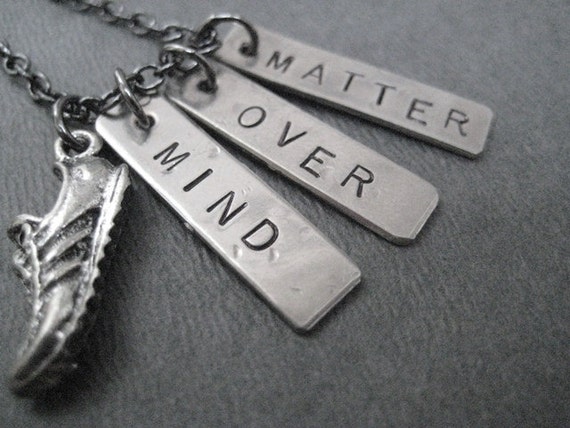
Matter over Mind

I've never been impressed by exhortations to "will." One of my favorite poems, "Ruby Bates," makes the point this way:

"The Reds are virgins. They wear business suits
And talk a shrapnel-proof logic. They will all die
Of biology ..."

It makes us feel good to tell others that "it's all in your head" or to suggest, implicitly or explicitly, that wishing can make things so. As a materialist, I can't help but feel that this is yet another way that we are dishonest with ourselves and each other, inevitably keeping us from truly becoming what we can be by focusing on that over which we have far less control of than we think.


All that said to say that I think this article sums up the point very well, and does so in a martial arts context that I think most of us can appreciate. The intro alone is worth your time.

Resolutions based on “Will Power” FAIL 80% of the time; Resolutions based on changing the Systems you work in SUCCEED 80% of the time. 
Remember, it’s well-intentioned SYSTEMS that make us fat and lazy. You never walk anywhere because it’s too easy to drive your car. Your car, and all the roads you drive on, are a system.
 STOP saying to yourself “I’m going to try harder” and instead, this weekend just spend one solid hour seeing the systems that reinforce your bad behaviors. And then change them. ”

Sunday, April 13, 2014

JT v DJ at the NY Open 2014

It's hard not to see this match through the lens of their shared tenure - one since abandoned if not renounced, one still very much alive and well - as part of Team Lloyd Irvin. However you choose to look at it, it is a quality contest between two of America's most engaged jiu-jitsu competitors.

Saturday, January 05, 2013

Sunday, December 16, 2012

Want to Boost Your Submission Rate? The 5 Most Important Submissions in Jiu-Jitsu

Pick one (or two) from this list.  Courtesy of Lloyd Irvin's BJJ Kumite.


The upshot?  Top submissions in the gi were armbars (8), toehold (6), triangle choke (6), bow and arrow choke (5).  Top submissions in no-gi were RNC (16) and kimura (6).

By percentage, 17% of the submissions in the gi came from armbars, 13% from toeholds or triangles.  No gi percentages were even more stark: 34% from RNC, 13% from the kimura.

The combined tally is also interesting: RNC (17), armbar (10), triangle (8), toehold and kimura (7).  You could call these the five most important submissions in jiu-jitsu/grappling.

This research, if I remember correctly, pretty much confirms the work Lloyd Irvin did years ago in analyzing submission rates in the Pan, the World Championships and (I think) the Brazilian nationals over the years.  It played a pivotal role in his decision to emphasize techniques like the triangle and the kimura, and more recently the bow and arrow choke, for his competition team.

What is interesting is that no Lloyd Irvin fighters are especially known for their armbars.  I would be curious to know if Lloyd has made a discretionary call when it comes to armbars in competition that goes against the grain of the data.

Wednesday, December 05, 2012

Top 5 American Brazilian Jiu-Jitsu Shamans


Top 5 American Brazilian Jiu-Jitsu Shamans

1. Lloyd Irvin

2. John Danaher

3. Mark Laimon

4. Eddie Bravo

5. Matt Hume

Honorable Mention: Henry Akins, Shawn Williams

American BJJ Shamanhood is earned primarily through a combination of a surplus of technical mastery, typically evidenced by teaching reputation and/or student competitive success, and a relative absence of personal competitive experience, thus adding to the mystique and controversy of the aforementioned technical mastery.

Sunday, September 23, 2012

Micro. Transitional. Drilling.

Lloyd Irvin has been talking about this for sometime.  And while I had an idea of where he was coming from, it is great to hear him talk a bit more about the concept and to show it in this video.

Lloyd Irvin Explains His Micro Transitional Drilling System

It's fascinating how few people, even now, understand what LI is bringing to jiu-jitsu.  From quantifying the top performing submissions to bringing standard and widely-used professional sports training and psychological approaches to an art that is still very much in its "emergent" stage, LI is a valuable a figure in contemporary jiu-jitsu as there is.  And I'm not just saying that because my kimura/americana submission rate has skyrocketed over the past month by incorporating some of the most fundamental concepts of his kimura mouse trap system.

I've been trying to refine a couple of key areas of my game, including taking the back.  The micro transition LI shows here for dealing with an opponent turning into you was as valuable as anything I've read in any of the 10+ BJJ books on my shelf or the 20+ BJJ DVDs on the wall.


Tuesday, August 14, 2012

Tuesday, April 10, 2012

Training Days: Friday, Saturday, Monday

One of the downsides of writing for a living and training jiu-jitsu as frequently as I have been over the past month is that it's that much harder to get the energy to post at the end of the day. I'm working on rectifying that. I'm thinking about jiu-jitsu constantly, thinking about ways to express what I'm learning in this "second life" as a faixa preta ...


What's interesting is that I'm spending a lot of time going back over my old notes from when I was a blue belt and purple belt, back when I was trying to cobble together a jiu-jitsu game that suited my more deliberate/less dynamic style. Somewhere along the way, if you're not careful, your jiu-jitsu can become little more than a reaction to what happened yesterday. In this trap, everything becomes tactical, progress ever more incremental, and instead of integrating parts into a whole, you find yourself one day on the mat with a jiu-jitsu that seems almost chaotic, a riot of misses and single-movements, the world as seen through the lens of a tumbling camera.

One of the tricks I used to think about was what would a book or DVD of my jiu-jitsu "game" look like? What would be the main sections? The chapter headings? The bonus material at the back? I think this is another way of integrating the disparate guards, sweeps, passes, escapes, transitions, and finishes that you know and use, but rarely with the fluidity, precision, and confidence that you demand.

This is where the "training beyond the training" comes in, what Lloyd Irvin means when he compares the work done before and after the scheduled training period to doing homework outside of a class in physics or history. I've been trying to designate a few moves every day that I'll always look to work on with a willing partner: always basic items and details, the connective tissue, again, to help turn the parts into a whole.

Weight has been pretty good over the past few days: 158 and a half on Friday, 160 and a half on Monday. Looking to get in another four-day training week after taking Tuesday off.

Tuesday, January 24, 2012

Got Your High Percentage Guard Passes

Right here.

Mundials 2004: Best Guard Passes: BJJ DVD Project

Or at least through the World Championships of 2004. If the highest percentage submissions (courtesy of Lloyd Irvin Labs) are the RNC, kimura and triangle, then the highest percentage guard passes (and who doesn't need one of those?) are somewhere in the data above.

Friday, July 15, 2011

An Interview with Lloyd Irvin

Interview with Lloyd Irvin
Whatever mindset you allow on your mats will become the culture of your mats. I have a saying, “if everyone on our team did what you did, what type of team would we have?” This is a question that I have made a standard at my school. The answer can only be a good team or a bad team. So if a student gets tapped in practice and throws a fit, it would never be allowed on my mats. If I was to ask that student my question, “If everyone on our team threw a fit when they got tapped on our floor what type of team would we have?” The answer would be a bad team. Many instructors allow things to happen on their floor that the answer would be ‘a bad team’ and since they allow others do it and it becomes an accepted behavior within that team then it results in a serious problem.

Thursday, July 07, 2011

Sunday, May 22, 2011

Sunday, May 01, 2011

Why I Listen to/Read Lloyd Irvin

Here's your assignment.

Ok, check this out, I recently had my students focus on this because at some point you have to become a Master at your go to moves. Most people will become really good at their go to moves "over time" but I've been focused on cutting that time to a mere fraction of the normal time it takes most people.

Over the years I've proven it with my students and at first I proved it with myself as my own test subject.

As a motivation for my students you've probably heard that at tournaments I have what I call 'Money Moves', these are moves that if my students pull off they get paid. Like the UFC bonues but I was doing it before Dana White. :-)

For example, The Kimura Kid made $450 at the pan ams for his submissions.

When I want my guys to focus on X choke from the mount I'll make that a money move for a tournament and during the training I only allow the X choke from the mount(if they get to the mount).

I also will do position specific LIVE drills from the mount to force them to work on it.

SO WHAT ARE YOU WORKING ON?

Here's my Sunday assignment for you, I want you to pick one sweep and one choke from positions that you get to the most and only use those 2 moves for the next week, if you like it I want you to push it out for 2 weeks.

So your assignment right now is to write down what your one sweep will be and what your one choke will be.

Then think about the positions that you need to get to for the move and which of your teammates you're able to attain these positions on.

Then make sure that you get to work with them, you can also ask your instructor if you can get paired up with them because you want to work on a specific technique set and they are the best partner for you.

That's it. Saturday afternoon let me know how the week went.

Have fun.

Lloyd Irvin aka The Grappling Renegade
Forever The King Of Leglocks

Monday, December 06, 2010

Ryan Hall Interview at Grappling Weekly

An excerpt:
BD: You had mentioned to me that you believe guard passing is your best skill, if you were to go back a few years and look at the forums and see all the hits for Ryan Hall and your success with the triangle and inverted guard and what not, it’s completely different with your mentality now. You’ve gone through a transformation and have changed since then. Your whole jiu jitsu philosophy has changed. How did his all come about?

RH: I agree with you on your statement about my change in Jiu-Jitsu mentality. I feel like my game was developed improperly at the beginning. I’ve had to do a lot of fixing and tinkering with my game, but I’ve always looked at the best guys to see what they are doing and why, basically try to become more like them. What’s really allowed me to improve is developing a deeper understanding of all of the movements I know and how they fit together into a cohesive framework and strategy–this has been the key for me. I was forced into introspection when I had surgery on my wrist in the end of 2008, keeping me off the mat with no training for 8 months.

Read more Interview with Ryan Hall

Friday, September 03, 2010

"You and Only You"

"1. There is a MAJOR problem with the normal grappling structure if you want to have GREAT success in grappling.

2. This structure isn't set up for you to succeed, it's set up to provide the masses with a method of training and the basic information that you must have in order to have any chance.

3. To receive the very best from your training you must know what you need to do for YOU and only YOU."

--Lloyd Irvin, "7 Lessons"

Monday, August 09, 2010

Highest Probability Submissions

1. Triangle choke
In some instances, the triangle/armbar combination is the #1 submission in term of high probability finishes. But even so, the emphasis is on the triangle part of that combo, which sets up the armbar.

2. Chokes from the Back/Rear Mount
Gi or no gi, back or rear mount is without a doubt the most dominant position in jiu jitsu/grappling. And insofar as chokes are the most efficient submission, chokes from the back are understandably high probability.

3. Kimura
The Mendes brothers have referred to the kimura lock as one of the most important holds in jiu jitsu. The kimura is also a favorite of Japanese MMA superstar Sakuraba. Versatile, and a great controlling hold as well as a finishing hold, the kimura has all of the advantages of the armbar without any of the armbar's liabilities.

Tuesday, July 27, 2010

Still Raining, Still Dreaming

One of the things that I'm learning about competition is how limited, how small a winning strategy often is. Lloyd Irvin has really popularized this notion when it comes to jiu jitsu. But that said, Rodrigo has been encouraging us to "do what works for you" ever since I started training some five years ago.

It makes almost too much sense. Ali? Footwork and a left jab. Roger? Mount and choke. Frazier? Left hook all day. Marcelo? Back and choke.

Everybody has an edge. The trick is to identify it as early as possible and then own it. There are guys who have made great careers in the NBA out of nothing more than being able to consistently hit a 20-foot jump shot on demand.

When I extract "what's worked in competition" from what's only been "tried," the path to success when the clock is on is clear: pull half, Rodeo to the top, finish at the shoulder/elbow/wrist/neck from side control. What I need to do in the weeks leading up to competition is to refine those specific situations and to plan for potential counters. And that is pretty much it.

At the risk of making excuses, I think a lot of my struggles in competition have come from failing to see things in this light. I know that a lot of my "cardio" issues, especially at blue belt, had more to do with cognitive confusion than my ability to grapple for 5-6 minutes at a clip. Dan Inosanto famously said that "if you are tired, you aren't even smart." I'd say that the opposite is also true: if you aren't smart, then getting tired while fighting is very easy to do.

Being smart in this context, the competitive context, is about having a gameplan - however "small" - drilling the gameplan and then executing the gameplan. It's a very small circle of trust, or maybe more accurately, a very small circle of risk, that you want to court in competition. That may make for some less-than-novel training sessions in the month before the event. But under stress, that less-than-novel training is what your body will remember before "you" do.
That's the kind of circuitry you want to build, to harken back to insights of The Talent Code.

One of my biggest goals at Gracie Barra Seattle is to help build a culture of drilling before and/or after class. You look at basketball or soccer players before and after practice. They aren't playing full-on matches with each other. They are doing 10-20% moves with each other, practicing little small moves: back to the basket out of the post, a feint to the corner and drive toward the goal, that "highlight move" in slow-motion. I remember reading in one of Lloyd Irvin's e-mails years ago something to the effect of think of how much better you'd be if you spent five minutes after every class practicing a certain sweep or escape for two or three weeks. That five minutes would probably cost you one "live training" sparring session each day. But think of where you'd be with that one sweep or escape or guard pass or submission in a month's time. In the eight weeks leading up to a tournament, those five minute sessions would really add up. Imagine if they were 10-minutes after every class. At the end of eight weeks, that's four hours worth of focus on one or two critical positions and situations, minimum.

The only person I ever saw do anything remotely like this was Steve W, one of the most valuable training partners during meu purgatorio na faixa roxa, who never hesistated to ask someone to drill a takedown or sweep from the guard or a finish before or after class. It's the kind of thing that I think really benefits a team exponentially over time. I also think it makes sparrng more productive because guys can spend time developing technique independently, outside the context of competitive sparring.

In other words, if I'm working on the deep half guard during a time when the coursework for the academy is on passing the guard, then the only time I'm going to get to work on my deep half guard is during sparring. But sparring is not the kind of ideal, controlled situation that's best for developing a new technique. Even if I wait to train new techniques on less experienced guys (which is the sensible thing to do), that training still not the kind of controlled setting that is key to getting new technique down from the roots up.

It's wildly inefficient when you think about it. The only option is drilling, outside of the class, as much or as little as you can get.

5-10 minutes a day. 3-5 times a week. Armbars from the guard ... escapes from north-south and side control ... pass the guard. Whatever you want for your game, it seems like that's best the way to get it.

Monday, July 12, 2010

Lloyd Irvin: Jiu Jitsu Quant


An utterly must-hear interview with Lloyd Irvin by Caleb of Fightworks Podcast. Irvin's points about Atos and the Mendes brothers are both obvious and all-too-insightful. And his thoughts about the future of jiu jitsu in terms of potential mainstream audience are, arguably, brutally honest.

#219 Lloyd Irvin, Rodrigo “Comprido” Medeiros

What I love about this interview is that it is the clearest indication that Master Lloyd is a quant at heart. He talks about things like his theory on focusing on the highest percentage submissions, based on watching hours and hours of championship footage, about focusing on what has worked historically.

My boss over at The Daily Planet would love this.